


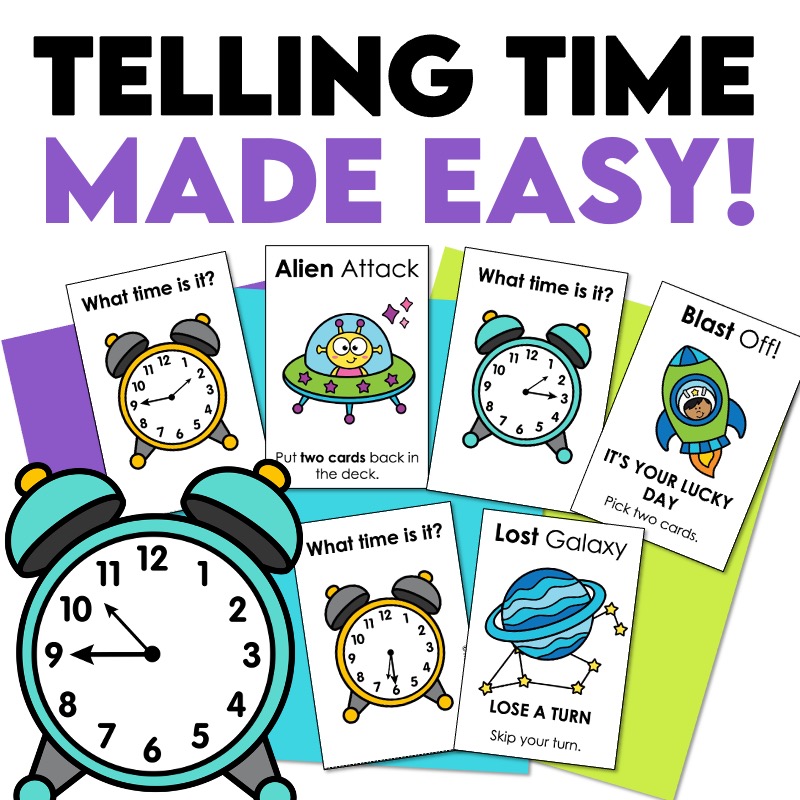
Teaching time can be tricky at first, especially when students are still learning how the hour hand and minute hand work together. The good news is that with the right sequence and lots of hands-on practice, telling time becomes much easier to teach and much more fun to learn. If you are looking for telling time activities that go beyond worksheets, these classroom ideas will help you build confidence step by step.
In this post, you will find practical tips for how to teach telling time, where to begin, and ten fun ways to practice telling time in the classroom using games, task cards, board games, Boom Cards, and interactive activities. You can also see all telling time resources here.
Where to Begin When Teaching Telling Time
The best way to teach telling time is to move in small steps. Start with the parts of an analog clock and make sure students understand what each hand does. Once they can identify the hour hand and minute hand, begin with the easiest time concepts first before moving into more detailed intervals.
A simple teaching sequence usually works best:
- teach the parts of the clock face
- practice telling time to the hour
- move to half hour
- add quarter past and quarter to
- practice telling time to the nearest 5 minutes
- compare clocks and read time in different formats
Students need lots of repetition, but that does not mean the practice has to feel repetitive. Mixing movement, games, digital practice, and partner activities keeps students engaged while helping the skill stick.
How to Practice Telling Time So It Really Sticks
Once students understand the basics, the goal is to give them repeated exposure in different formats. That means reading analog clocks, matching analog to digital time, comparing two clocks, saying time aloud, and applying the skill during games. This variety matters because some students recognize time on one type of activity but struggle when the format changes.
The most effective telling time practice usually includes:
- whole-class modeling
- partner games
- small-group review
- independent digital practice
- quick spiral review throughout the week
Below are ten fun ways to practice telling time in the classroom, with resource ideas you can use for centers, review, early finishers, and whole-group lessons.
1. Use a Card Game for Fast, Repeatable Clock Practice
A card game is one of the easiest ways to get students reading lots of clocks in a short amount of time. Students stay engaged because the game moves quickly, and you can use it in centers, small groups, or as a fast end-of-lesson review.

This telling time card game to the nearest 5 minutes is a great choice when students are ready to move beyond the hour and half hour. It gives them practice reading both digital and analog time while keeping the activity simple and fun.
2. Make Telling Time Review Feel Exciting with Bingo
Bingo is a classroom favorite for a reason. It is easy to explain, easy to set up, and gives students repeated exposure to the same skill without feeling boring. When practicing time, students need to look carefully and match what they hear to the correct clock.

This telling time bingo game works well for whole-class practice and helps students build confidence with clock reading in a low-pressure format. It is especially useful when you want meaningful review without a lot of prep.
3. Add Digital Practice with Interactive Boom Cards
Digital practice is helpful because students can work independently while still getting focused review. Boom Cards are especially useful for centers, technology rotations, homework, and self-paced practice.

These telling time Boom Cards are ideal for practicing the hour, half hour, and quarter hour. They are a strong option when you want students to get independent repetition while still keeping the activity engaging.
4. Motivate Students with Mystery Picture Activities
If students need extra motivation, mystery picture activities can make a big difference. Revealing a picture as they answer correctly adds just enough excitement to keep them focused and wanting to continue.

These telling time mystery picture Boom Cards are a fun way to practice the hour, half hour, and quarter hour while adding a playful challenge. They work well for individual review, centers, and digital rotations.
5. Use an Analog Clock Card Game for Small Groups
Some students need repeated analog clock practice in a simple, focused format. A smaller card game makes that easy because students can say the time aloud, check one another, and build fluency through repetition.

This telling time analog clock game focuses on the hour, half hour, and quarter hour, making it a great fit for students who are still building a strong foundation before moving on to the nearest 5 minutes.
6. Turn Review into a Whole-Class Game Show
Whole-class review works especially well when it feels energetic. A game show format turns time practice into something students look forward to while still giving you a chance to check understanding as a group.
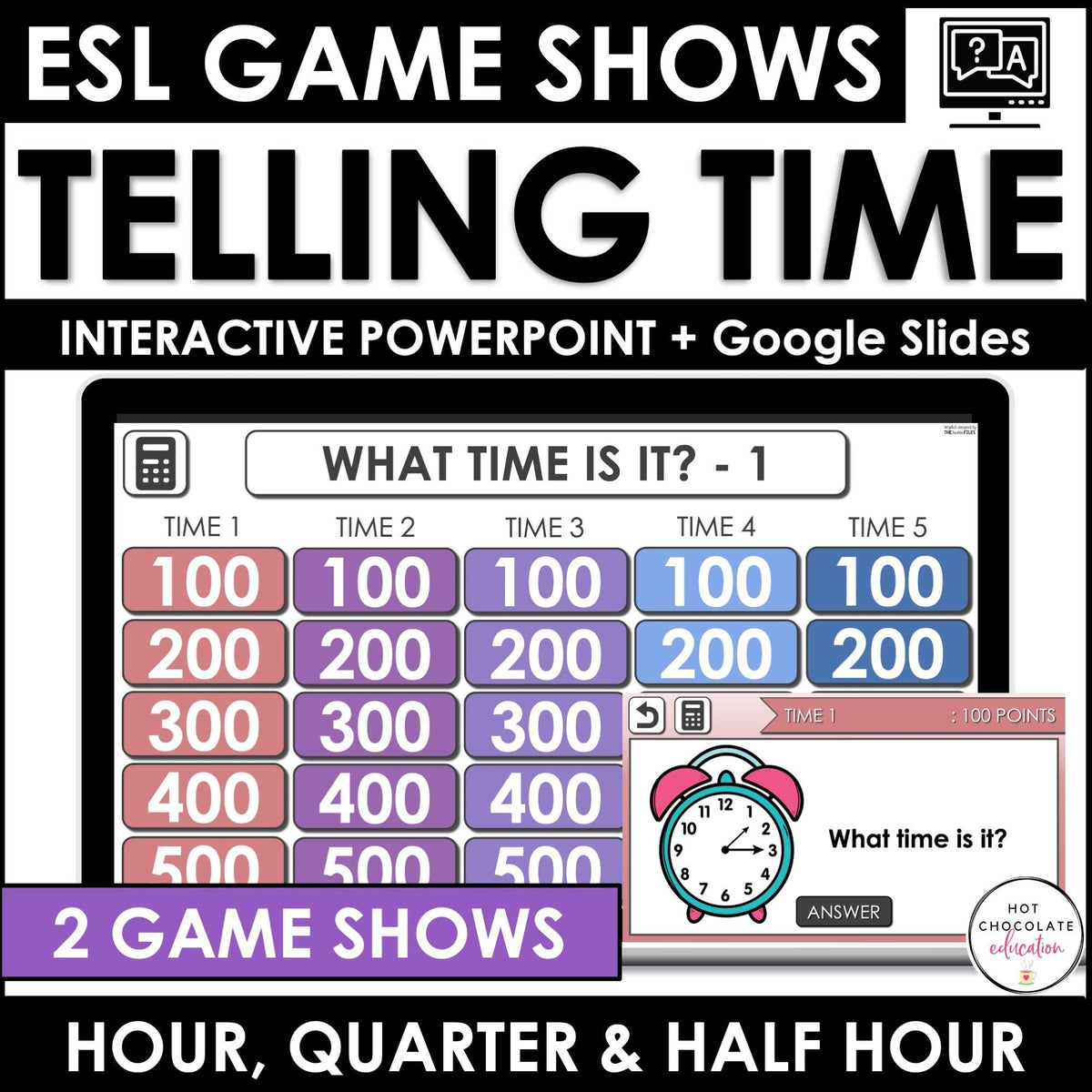
This interactive telling time game show is ideal for reviewing the hour, half hour, and 15 minutes in a fun whole-group setting. It is a great choice for projecting on the board during review days or before a quiz.
7. Let Students Practice Through a Board Game
Board games are great for partner work and centers because they naturally build repeated practice into a format students already enjoy. They also encourage turn-taking, speaking, and peer support.

This telling time board game gives students a hands-on way to review analog clocks to the hour, half hour, and quarter hour. It is a strong option for math centers or early finisher tubs.
8. Strengthen Understanding by Comparing Clocks
Once students can read a single clock, comparing clocks helps deepen understanding. This skill asks students to look carefully, think about which time is earlier or later, and pay close attention to the hands.

These telling time task cards for comparing clocks are a smart way to extend practice after students know the basics. They work well for centers, partner work, and quiet review.
9. Use a Bundle to Differentiate and Spiral Review
One of the best ways to teach time is to come back to it often. A bundle makes that easier because you have multiple formats ready to go for different levels, different parts of the year, and different classroom needs.

This telling time games bundle is especially useful if you want a mix of activities for the hour, half hour, quarter hour, and nearest 5 minutes. It makes it easier to differentiate and spiral review throughout the year.
10. Mix Printable and Digital Activities for Better Results
The most effective telling time instruction usually includes both printable and digital practice. Printable games are great for social learning, speaking, and hands-on review. Digital activities are useful for independent work, technology centers, and fast feedback. When you combine both, students get more varied exposure to the same skill.
A good weekly routine might look like this:
- Monday: model and teach a new time concept
- Tuesday: practice with a card game or board game
- Wednesday: complete a digital review activity
- Thursday: compare clocks or play bingo
- Friday: review with a game show or quick small-group game
This kind of repetition keeps students from forgetting what they learned while making the practice feel fresh.
Tips for Teaching Telling Time More Easily
If your students are struggling, it often helps to slow down and focus on one step at a time. Here are a few teaching tips that make a big difference:
- Use large classroom clocks and model often.
- Keep the focus on analog clocks first if students are confusing the hands.
- Practice saying time aloud in full sentences.
- Review daily in short bursts instead of teaching it once and moving on.
- Use games and visuals to reduce frustration and build confidence.
Most students need more practice than we first expect, especially with quarter past, quarter to, and the nearest 5 minutes. That is why repeated low-pressure review matters so much.
Final Thoughts
If you want students to really understand time, the key is to teach it in small steps and then keep practicing in different ways. Games, task cards, Boom Cards, bingo, and whole-class review activities all help make the concept more manageable and more memorable.
These ten ideas give you a mix of printable and digital telling time activities you can use for centers, small groups, whole-class lessons, and independent practice. For even more options, browse the full telling time collection at Hot Chocolate Teachables.
You might also be interested in:
Looking for more engaging, low-prep classroom ideas? Discover quick lesson fillers in Easy ESL Activities for Busy Teachers, inspire creative writing with the Summer Writing Craft Bucket List, or boost engagement with Homework Escape Rooms for ESL: The Complete Teacher Guide. Each post is packed with practical, classroom-tested ideas to help you save time while keeping students motivated and learning.
