


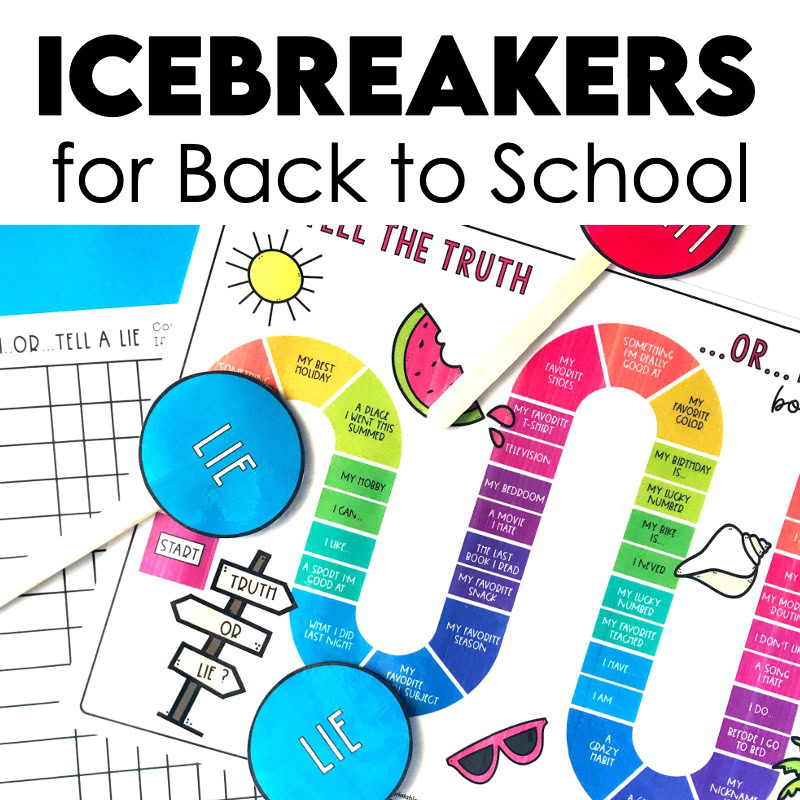
ESL Icebreaker Games That Get Students Talking (First Week, Low-Prep)
ESL Icebreaker Games That Get Students Talking
If the first week of school feels like a lot of awkward silence, you’re not alone. The easiest way to get a new class talking is to use ESL icebreakers that are low-pressure, highly structured, and repeatable—so students know exactly what to say and when to say it.
This back-to-school guide shares ESL icebreaker games and low-prep ESL speaking activities you can run on day one (and keep using all year). You’ll also see how to support shy students and mixed-level groups, plus what’s included in my printable ESL conversation games bundle.
Get the bundle here: ESL Icebreaker Speaking Games Bundle (Hot Chocolate Teachables) or Icebreaker Games & Speaking Activities Bundle (TPT).
Why ESL Students Need Low-Pressure Speaking Practice
In a new class, students are doing a lot at once: learning your routines, figuring out classmates, and (for English learners) processing language in real time. Even students who “know English” can freeze when the speaking task is too open-ended. That’s why ELL speaking practice works best when it’s structured, short, and predictable.
Here’s what teachers usually see during back-to-school ESL season:
- Reluctant speakers worry about pronunciation and being corrected in front of peers.
- Newcomers may understand more than they can produce, so “share about yourself” feels impossible.
- Mixed-level classes create a confidence gap—some students dominate while others go quiet.
- Awkward silence happens when students don’t have language support or a clear goal.
Well-designed ESL icebreaker games solve this by giving students a “script” for success: a prompt, a timer, a simple speaking structure, and a reason to interact. You’re not just filling time—you’re building routines and classroom community from day one.
What Makes a Good ESL Icebreaker?
The best ESL icebreaker activities for back to school have one job: get students speaking without making them feel exposed. That means your activity needs to be easy to start, easy to repeat, and supportive for different proficiency levels.
Teacher checklist for strong ESL icebreakers
- Low prep: print-and-go or project-and-play.
- Short, structured turns: 20–60 seconds is enough at the start of the year.
- Built-in support: sentence frames, examples, and predictable question formats.
- Partner/group interaction: safer than whole-class speaking on day one.
- Repeatable routines: students get more confident every time you reuse the format.
- Easy differentiation: beginners answer simply; advanced students extend and follow up.
If you’re looking for ESL warm-up games that actually build confidence, focus on routines you can run daily in the first week—and keep using in September, October, and beyond.
ESL Icebreaker Games for the First Week of School
Below are classroom-tested first week ESL speaking activities that work especially well on day one, day two, and the rest of the first week. You can run these as whole-class routines, partner rotations, or center options.
1) Two-Minute “Meet & Greet” Rotations
Give students one question prompt. Students talk for one minute each, then rotate partners. This is one of the fastest ESL icebreaker games to launch because it’s time-limited and predictable.
- Beginner support: provide 1–2 sentence frames (“I like…” “My favorite is…”).
- Extension: require one follow-up question (“Why?” “When?” “With who?”).
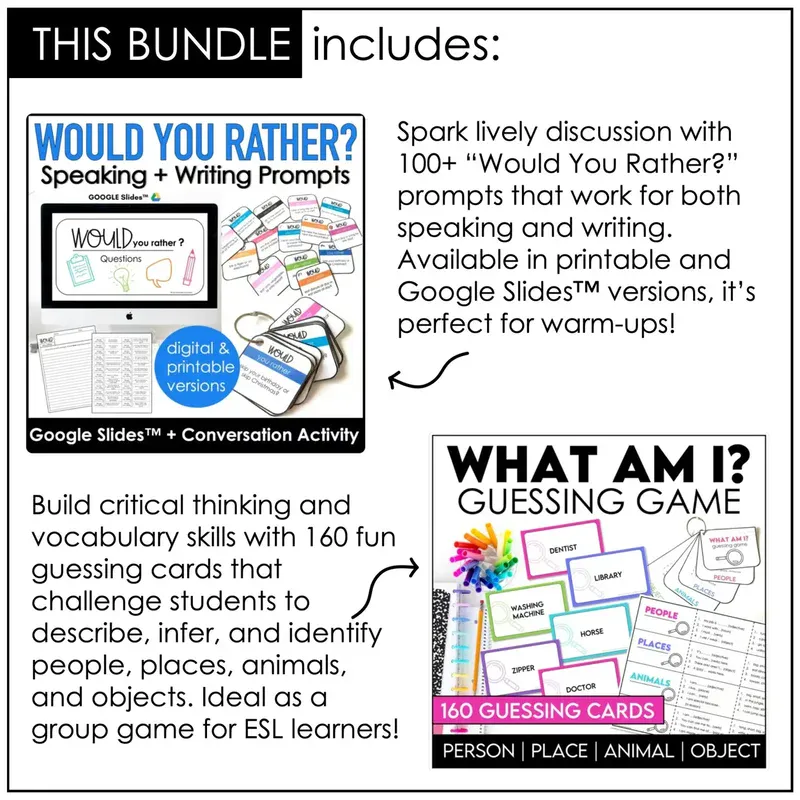
2) “Would You Rather” (Low-Pressure Opinions)
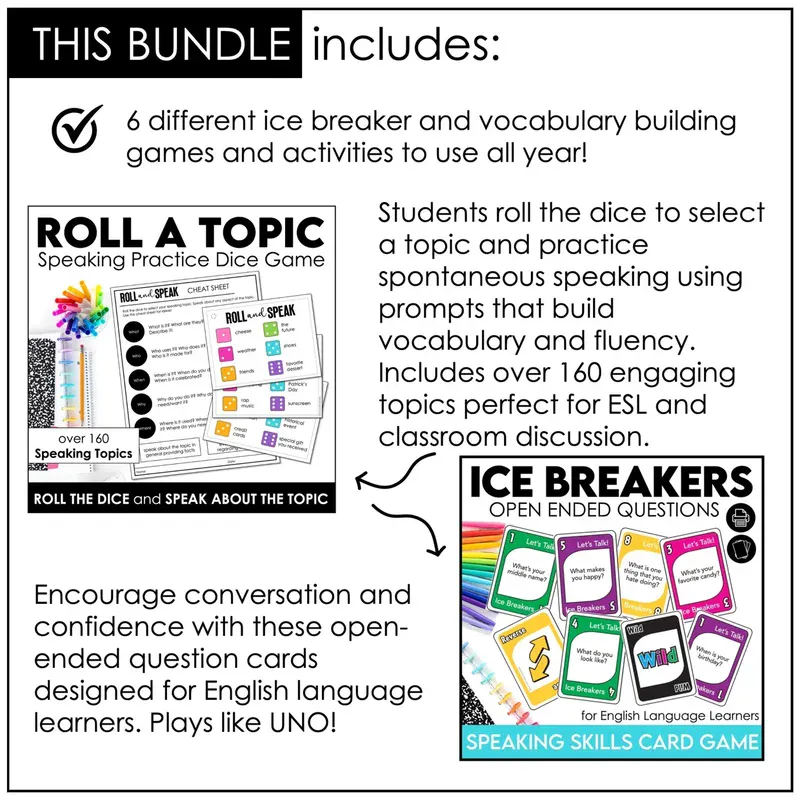
Would-you-rather questions are perfect fun ESL speaking games for beginners because students can answer with a choice and one reason. Shy students often participate more because there’s no “right answer.”
3) “Speak for 30 Seconds” Fluency Sprints
Short time limits reduce anxiety. Students draw a prompt and speak for 30 seconds. Partner listens and asks one follow-up. This works beautifully as an ESL warm-up game for the first week of school.
4) Partner Interviews (Question Stems)
Interviews feel safer than “discussion” because students have a job: ask, listen, and report back. It’s a classic first-week routine that builds confidence fast.
5) Small-Group “Pick a Prompt” Discussions
Students choose a prompt from a set (instead of being put on the spot). Choice lowers pressure and increases participation.
These routines work best when you have a ready stack of conversation cards ESL icebreaker games for the first day of school—so you don’t have to invent prompts in the moment.
How to Use Speaking Games with Shy Students
If you’re searching for ESL conversation activities for shy students, the goal is not to force big speaking on day one. The goal is to build “safe success” through small wins—short turns, clear language, and predictable routines.
What works in real classrooms
- Start with pair talk: most shy students will speak to one person before the whole class.
- Give a sentence frame every time: frames reduce anxiety and increase accuracy.
- Use timed turns: 20–40 seconds feels manageable.
- Build in think time: give 10 seconds to plan before speaking.
- Celebrate effort: praise participation and risk-taking, not perfect grammar.
Common student errors + quick fixes
- One-word answers: require one “because” sentence (“I choose ___ because ___.”).
- “I don’t know” habit: allow a “pass once” rule + give a backup stem (“I’m not sure, but maybe…”).
- Dominant partners: use a simple rule—both partners must speak before switching cards.
This is exactly why structured ESL icebreakers work: they make speaking feel doable for everyone, including students who are nervous or brand-new.
ESL Conversation Games for Mixed-Level Classes
Mixed-level ESL classes are normal—and they’re also where speaking routines can fall apart if the expectations aren’t clear. The solution is not “easier questions.” The solution is a task where every student can participate at their level.
Simple differentiation that actually works
- Level 1 (newcomer): answer with a sentence frame + one detail.
- Level 2 (developing): answer + give one reason or example.
- Level 3 (stronger): answer + ask a follow-up + summarize a partner.
This keeps your ESL speaking games consistent while still challenging advanced students and supporting beginners.
What’s Included in This ESL Icebreaker Games Bundle
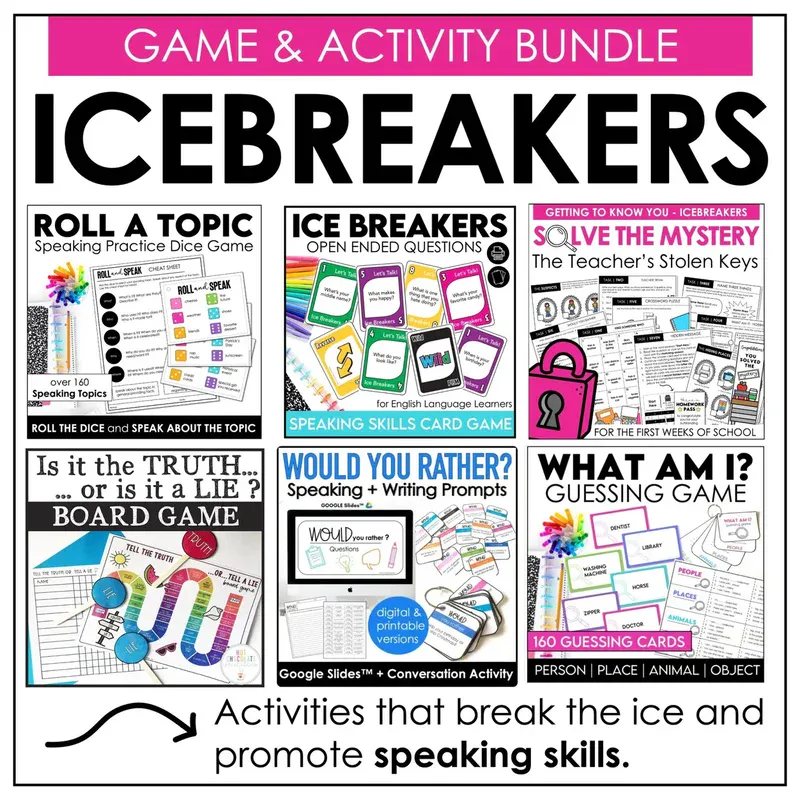
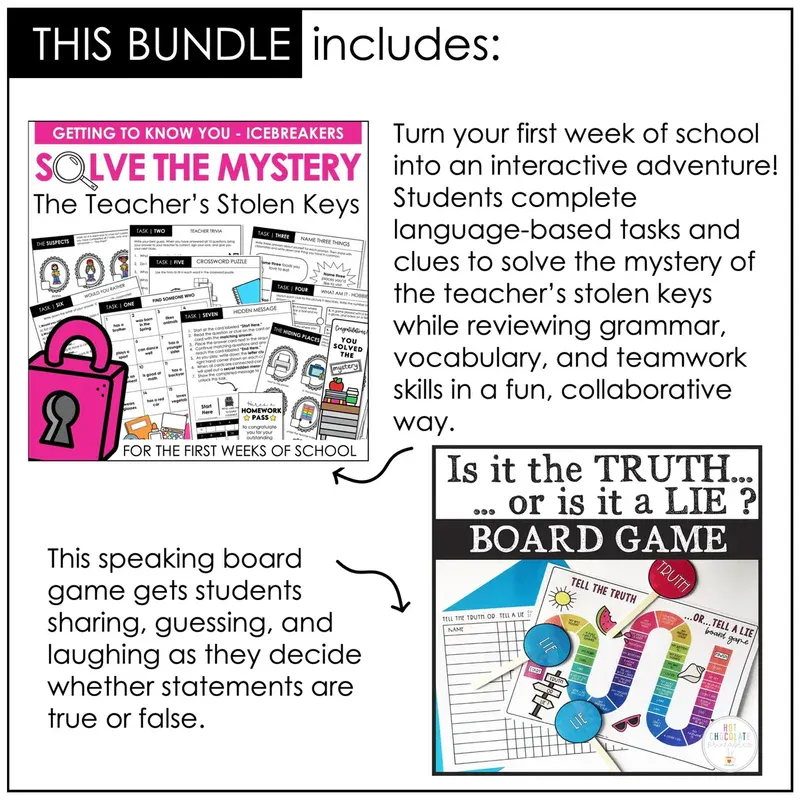
If you want a first-week system that’s truly low prep, the easiest route is to use a ready-made set of ESL icebreaker games you can repeat daily. This bundle is designed as a back-to-school resource for building routines, speaking confidence, and classroom community.
Bundle links: ESL Icebreaker Speaking Games Bundle (Hot Chocolate Teachables) and Icebreaker Games & Speaking Activities Bundle (TPT).
Teacher-friendly features
- Low-prep ESL speaking activities for new classes (print and go)
- Repeatable routines for the first week of school and beyond
- Conversation prompts designed to reduce awkward silence
- Structured support for shy students and mixed levels
Easy Ways to Use These Games All Year
The best ESL icebreakers aren’t just for week one. Once students know the routine, these become your go-to ESL warm-up games whenever you need quick speaking practice.
- Daily warm-ups: 5-minute speaking routine to start class
- Speaking centers: small-group conversation station with rotating prompts
- Early finisher plan: grab a card, talk with a partner, write one summary sentence
- Sub plans: print-and-go speaking tasks that still feel meaningful
- Community building: quick check-in questions during stressful weeks
Plug-and-play weekly routine
- Monday: two-minute speed chats
- Tuesday: would-you-rather + one reason
- Wednesday: interview partner + report one answer
- Thursday: speak for 30 seconds + follow-up
- Friday: choice day (student picks a prompt)
When you repeat routines, students stop panicking about what to say—and your ESL speaking activities get stronger every week.
Final Tips for Building Speaking Confidence
- Define success for day one: speaking in a pair for 20–30 seconds is a win.
- Use sentence frames: confidence grows when students know how to start.
- Make turn-taking predictable: timed turns prevent one student from dominating.
- Celebrate effort: praise participation and growth, not perfect grammar.
- Repeat the routine: the best speaking program is the one you can actually sustain.
If you want a ready-made set of ESL icebreaker games you can use immediately for the first week of school, grab the bundle here: Hot Chocolate Teachables or Teachers Pay Teachers.
More Posts You Might Like
- Classroom reward punch cards for back-to-school routines and goal tracking
- Five ESL speaking activities that work for shy students and mixed-level classes
- Teacher Toolkit Membership: unlimited ESL resources for busy teachers
Created by Hot Chocolate Teachables
