


How to Create a Classroom Reward System Students Actually Use (Punch Cards)
Classroom Reward Punch Cards for Behavior and Goal Tracking
If you want a classroom reward system students actually use (and you can actually manage), start with reward punch cards. They’re simple, visual, and low-prep: students see progress right away, you avoid constant prize shopping, and you can tie rewards to the exact behaviors and goals you’re trying to build during July, August, and September.
Below you’ll find a back-to-school-friendly plan for using editable punch cards as behavior punch cards, incentive punch cards, and goal tracking tools—plus reward ideas and teacher tips for keeping the system consistent all year.
Quick link: Grab the editable template here: Editable Reward Punch Cards (Hot Chocolate Teachables) or Editable Reward Punch Cards (TPT).
Why Simple Classroom Rewards Work Best
When teachers search for classroom rewards or student rewards, they’re usually trying to solve one of these back-to-school problems:
- Students don’t know expectations yet, so behavior feels unpredictable.
- Motivation is low during transitions, independent work, or cleanup.
- Some students need extra encouragement to stay on task.
- You want positive reinforcement, but you don’t want a complicated chart system.
In my experience, the reward system that lasts all year is the one that’s easy enough to use on your busiest day. A low prep classroom reward system is more consistent, and consistency is what changes behavior.
What went wrong the first time I tried rewards: I made it too big. Too many rules, too many prize options, too many steps. I ended up forgetting to use it (which meant students stopped caring). Reward punch cards fixed that because the routine is fast: punch, praise, move on.
What Are Reward Punch Cards?
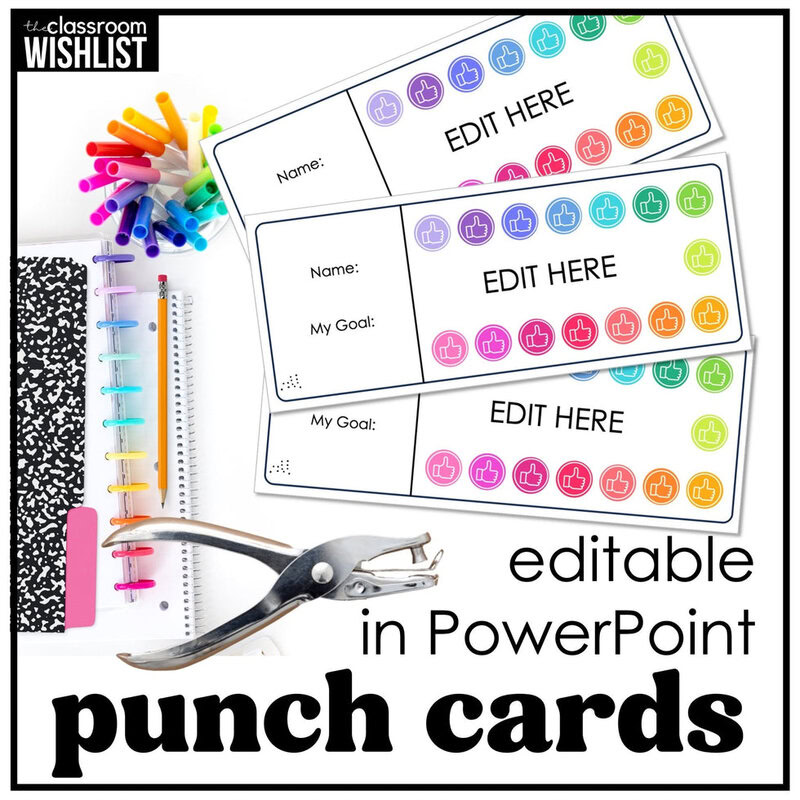
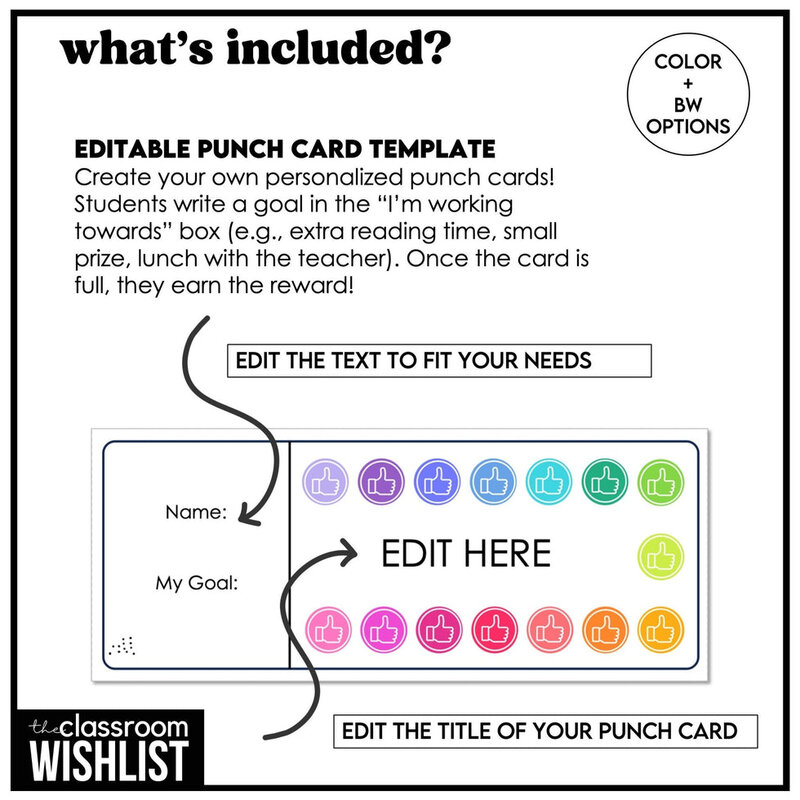
Reward punch cards are small cards students keep (or you store) that get punched, stamped, or marked when students meet a goal. Once the card is full—or reaches a set number of punches—students earn a reward.
They work so well as classroom punch cards because they’re:
- Visual: Students can see their progress immediately.
- Flexible: You decide what behaviors count and what rewards students earn.
- Low prep: No giant charts, no weekly reset, no complicated tracking sheets.
- Positive: Focus stays on what students are doing right.
This is also why teachers love editable reward punch cards for students. You can customize the goal wording to match your classroom expectations and routines.
How to Use Punch Cards for Positive Behavior
If you want reward punch cards for positive behavior to actually work, the key is to connect the punch to a specific behavior—and do it consistently for the first 2–3 weeks of school.
Back-to-school setup (July–September)
- Choose 3–5 behaviors you want to build into routines (not 15).
- Teach the behavior explicitly and model what it looks like.
- Punch immediately when you see it—especially early in the year.
- Name the behavior out loud so the class learns the expectation.
- Keep rewards simple so the system stays sustainable.
Teacher language that makes punches meaningful:
- “You started independent work right away. That’s exactly what we’re practicing.”
- “You transitioned quietly and safely. That helps everyone learn.”
- “You fixed the problem without arguing. That’s strong self-control.”
Common student mistakes (and quick fixes)
- Mistake: Students ask for punches constantly.
Fix: Use a rule: “Teachers give punches—students don’t request punches.” Praise the behavior instead. - Mistake: Students compare cards and get discouraged.
Fix: Keep cards private or teacher-stored, and reward growth (“you improved your transition time!”). - Mistake: You forget to punch.
Fix: Tie punching to a routine moment (end of morning work, after transitions, end of day).
This is exactly why behavior punch cards for elementary students are so effective: they’re quick enough to use consistently.
Classroom Goals You Can Track with Punch Cards
One reason teachers love goal tracking with punch cards is that you can adjust goals by season. During back-to-school, your goals are usually routine-based. Later, you can shift to academic habits.
Behavior goals (perfect for August and September)
- Start work within 1 minute of directions
- Transition quietly (hallway, carpet, centers)
- Follow directions the first time
- Keep hands/feet to self
- Use kind words / respectful voice
Learning goals (great once routines are set)
- Complete reading minutes or independent reading stamina
- Turn in homework or classwork on time
- Use a writing checklist before turning in work
- Show effort during challenging tasks
- Participate in partner talk (raise speaking confidence)
Personal goals (student goal tracking that builds ownership)
- Ask for help using a polite sentence
- Stay in seat during independent work
- Use coping strategies (deep breath, break, reset)
- Fix mistakes without giving up
That flexibility is the magic of student goal tracking with punch cards: the same tool works all year.
Reward Ideas Students Can Work Toward
You do not need expensive prizes for a reward system to work. In fact, the best classroom incentives are usually simple, fast, and repeatable.
Low-cost, high-motivation classroom rewards
- Pick your seat for one lesson
- Lunch with the teacher (or a friend)
- Line leader or helper job
- Show-and-tell item (30 seconds)
- Extra drawing time
- Choose the read-aloud book
- Wear a hat for the day (if allowed)
- Sticker / stamp / small classroom coupon
Group rewards (great for classroom community)
- 5 minutes of class game time
- Music during independent work
- Teacher does a silly challenge (dance break, joke, hat)
- Class compliment chain / shout-outs
These are the kinds of positive behavior reward ideas for teachers that keep your system sustainable.
How to Make Punch Cards Easy to Manage
If you’ve tried reward systems before and they fizzled, it was probably a management issue—not a student motivation issue. Here are the simplest ways to make classroom incentive punch cards manageable.
Pick one storage method
- Teacher-stored: Keep cards in a small file box by name. (Best for younger grades.)
- Student-stored: Students keep cards in a pencil pouch or folder. (Best if they can handle responsibility.)
Choose a punch schedule
- Instant punches: Great for teaching routines in August/September.
- Daily punch: Students earn a punch at the end of the day for meeting a goal.
- Transition punches: Punch after specific moments (carpet, hallway, centers).
Keep the goal wording super clear
The faster students understand the goal, the fewer arguments you’ll have. That’s why editable classroom reward cards are helpful—you can write goals in your classroom language.
What’s Included in This Editable Reward Punch Card Template
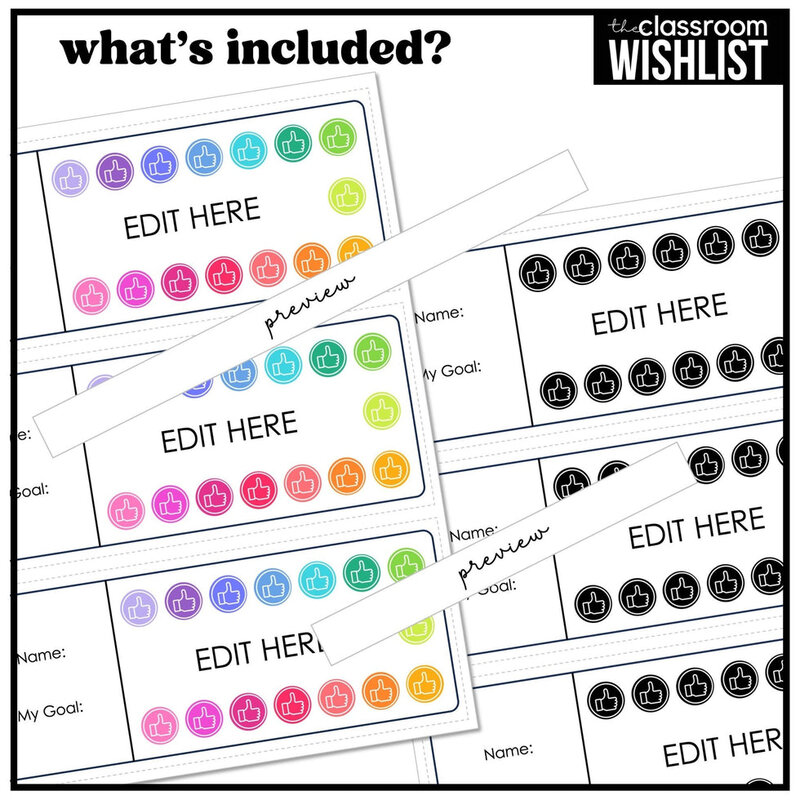
This resource is designed to be an easy, low prep classroom reward system you can set up once and reuse all year. You can customize the wording so it fits your classroom rules, school expectations, or PBIS goals.
Get it here: Editable Reward Punch Cards (Hot Chocolate Teachables) or Editable Reward Punch Cards (TPT).
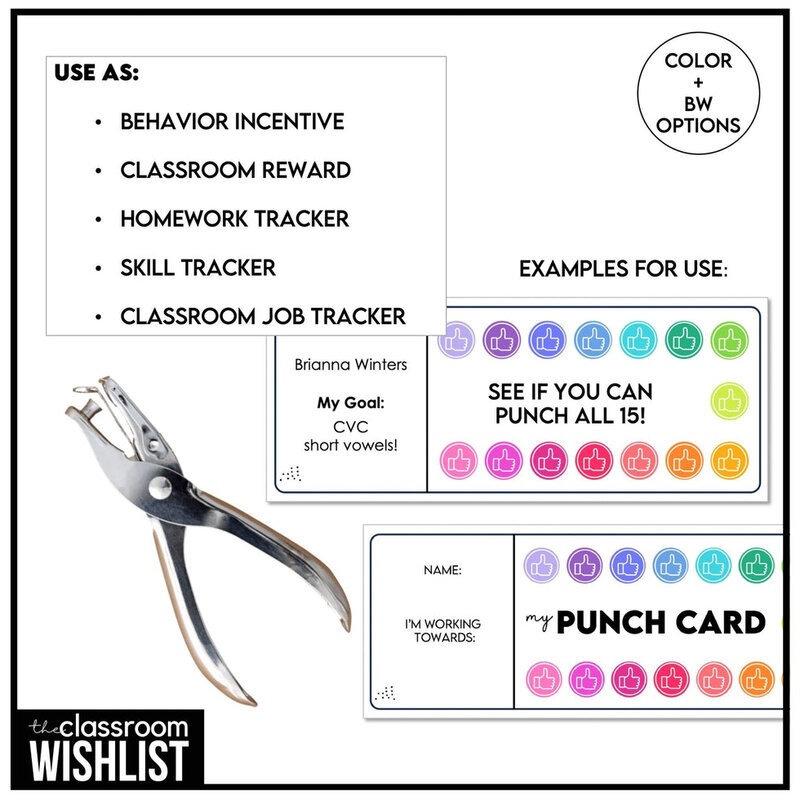
What teachers typically use these for
- Behavior tracking: routines, transitions, respectful behavior
- Goal tracking: individual goals, class goals, habit building
- Classroom rewards: simple, student-motivating incentives
- Positive reinforcement: building a calm, consistent classroom culture
A Simple Reward System for Busy Teachers (July–September Plan)
Here’s a back-to-school plan that works well for first weeks routines. It keeps your classroom reward system for elementary students consistent without becoming a second job.
Week 1: Build routines with fast feedback
- Pick 2 routine goals (example: “start work quickly” + “quiet transition”).
- Punch immediately when you see it.
- Celebrate small wins so students understand the expectation.
Week 2: Add one behavior goal
- Add a goal like “kind words” or “follow directions the first time.”
- Switch to daily punches if instant punches feel too frequent.
Week 3: Move toward independence
- Students reflect: “What earned my punch today?”
- Introduce a simple reward menu (3 options only).
- Keep consistency: same goal language, same check-in time.
What does success look like? Students can name the expectation, track their progress, and stay motivated without constant reminders. You’ll notice fewer power struggles because the system feels fair and predictable.
How is this different from a typical chart? Punch cards are personal, portable, and easy to reset. Instead of rewriting charts weekly, you reuse the same editable punch cards and simply adjust goals as your class grows.
Quick “Shop the Template” Links
- Editable Reward Punch Cards for Students (Hot Chocolate Teachables)
- Reward Incentive Punch Cards Editable Template (Teachers Pay Teachers)
More Teacher-Friendly Posts You Might Like
- Editable field trip permission slip templates that keep teacher paperwork organized
- Editable Amazon classroom wishlist QR cards for easy parent donations and classroom supplies
- Teacher Toolkit Membership: unlimited ESL resources for busy teachers who need low-prep activities
Created by Hot Chocolate Teachables
