


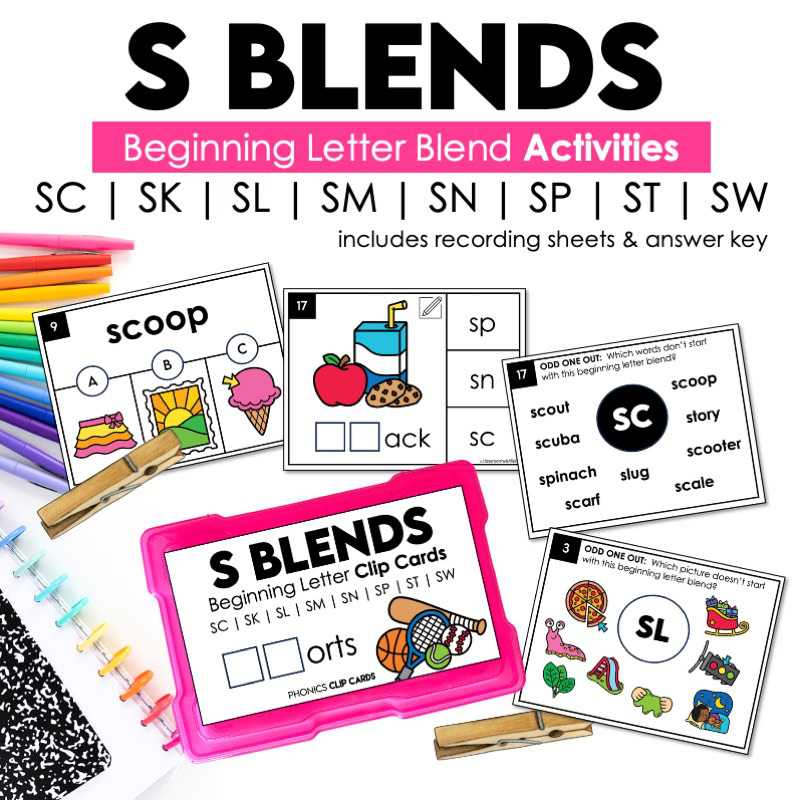
If you need a simple, effective way to teach S-blends in first grade, the easiest approach is to use a short, repeatable game routine instead of relying only on worksheets. A mix of S-blends bingo, S-blends clip cards, and an S-blends card game gives students the repetition they need while keeping practice active, visual, and fun.
If you want ready-to-use resources, you can grab the S-Blends Card Game on Hot Chocolate Teachables or the S-Blends Card Game on Teachers Pay Teachers, the S-Blends Bingo Game on Hot Chocolate Teachables or the S-Blends Bingo Game on Teachers Pay Teachers, and the S-Blends Task Cards on Hot Chocolate Teachables or the S-Blends Beginning Sounds Task Cards on Teachers Pay Teachers.
What Are S-Blends?
S-blends are consonant blends that begin with the letter s. In early phonics instruction, students often practice blends such as sc, sk, sl, sm, sn, sp, st, and sw. These are important because they appear in so many high-frequency and decodable words that children see early in reading.
Unlike a digraph, where two letters work together to make one sound, a blend keeps both sounds. Students need to hear and say each part smoothly. For example:
- st in star
- sp in spoon
- sl in slide
- sw in swing
- sk in skate
- sm in smile
- sn in snail
- sc in scarf
For many first graders, the challenge is not learning the individual sounds. The challenge is learning to blend them quickly and automatically when reading real words.
Why S-Blends Can Be Tricky for First Graders
If you teach first grade, you’ve probably seen this happen: a student can tell you the sounds for s and t separately, but when they see the word star, they pause, insert a vowel, or guess. That’s extremely common.
Some of the most common student mistakes with beginning S-blends include:
- Adding an extra vowel sound: saying suh-tar instead of star
- Skipping one sound in the blend
- Confusing similar blends like sp and st
- Relying on the picture but not reading the whole word
- Recognizing the word in isolation but not in connected reading
I’ve found that students do much better when blend practice feels short, repeated, and interactive. The first time I taught S-blends, I made the mistake of trying to do too much paper practice at once. My students could complete the page, but many still weren’t transferring the skill to actual reading. Once I shifted to a routine with games, oral practice, and quick review, I saw much better fluency and far less frustration.
Why Use Games Instead of Only Worksheets?
Worksheets can have a place, but they often don’t give enough repetition in a way that feels motivating. Game-based phonics practice helps students:
- see and hear the same patterns repeatedly
- stay engaged longer
- practice speaking, reading, and listening at the same time
- build automaticity without feeling pressured
- work independently or with a partner
That’s why a combination of S-blends bingo, S-blends clip cards, and an S-blends card game works so well. Each format targets a slightly different skill:
- Bingo builds recognition and listening
- Clip cards build accuracy and visual discrimination
- Card games build fluency, repeated reading, and confidence
What This No-Prep S-Blends Routine Looks Like
When I say “no-prep routine,” I don’t mean absolutely zero work ever. I mean you can print once, prep once, and then reuse the activities again and again. That matters so much in first grade, because your phonics block needs to be consistent without taking over your planning time.
Recommended Routine
- Day 1: Introduce or review the target blends
- Day 2: Use clip cards for focused discrimination
- Day 3: Play bingo for whole-group or small-group practice
- Day 4: Use the card game in centers or intervention groups
- Day 5: Mix and review using your favorite format
You can also rotate all three activities in a center block. Students love the predictability, and you get repeated exposure without boredom.
S-Blends Card Game: Great for Repeated Reading and Fluency
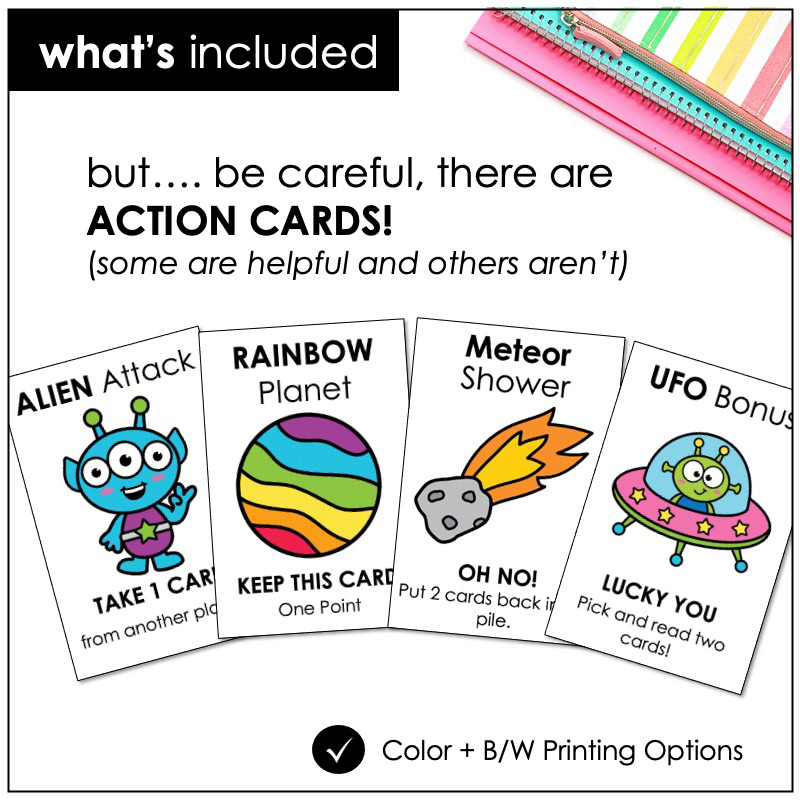
A good S-blends card game is one of the easiest ways to make phonics practice feel like play. Because students keep seeing the same sound patterns in different words, they get the repetition they need without the task feeling repetitive.
You can find this resource here: S-Blends Card Game on Hot Chocolate Teachables or S-Blends Card Game on TPT.
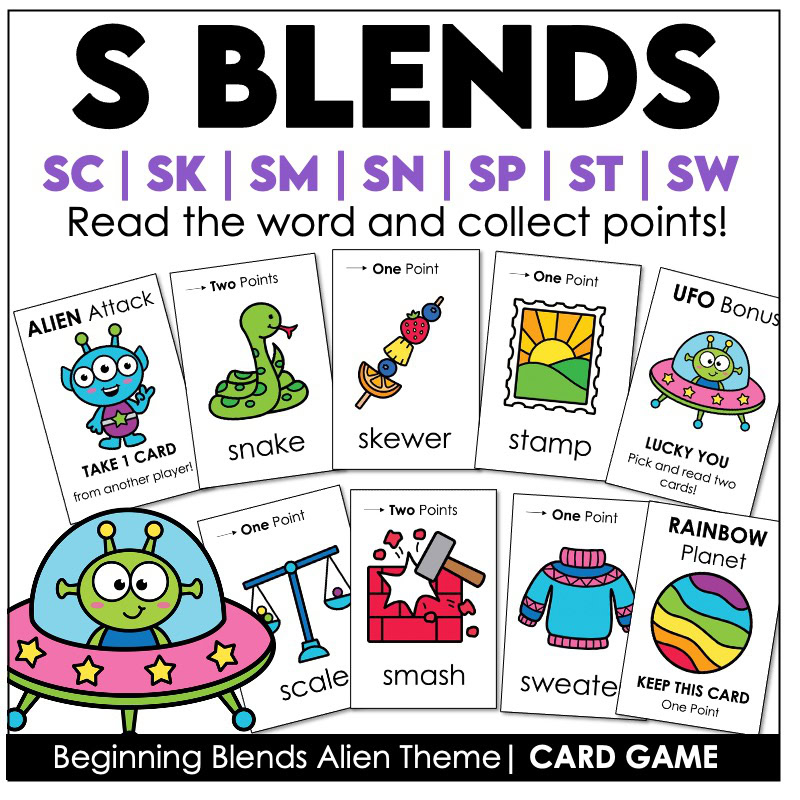
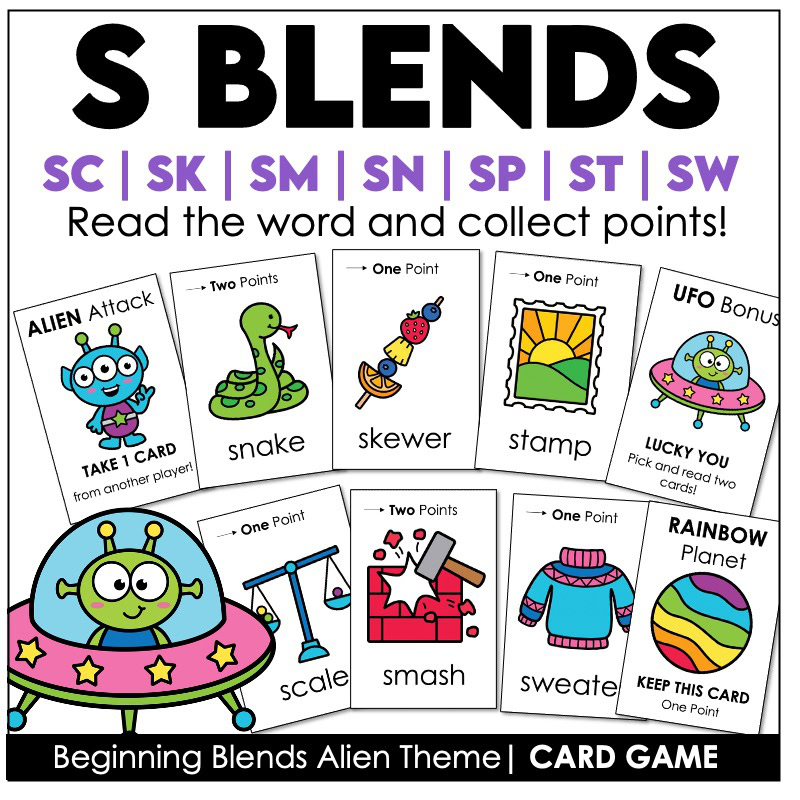
What I like most about card games is that they naturally encourage students to read the same pattern multiple times. In a worksheet, a child might read a word once and move on. In a card game, they may see, say, and hear the word several times in one round.
This kind of resource is especially useful for:
- phonics centers
- small-group reading intervention
- partner practice
- early finishers
- indoor recess review
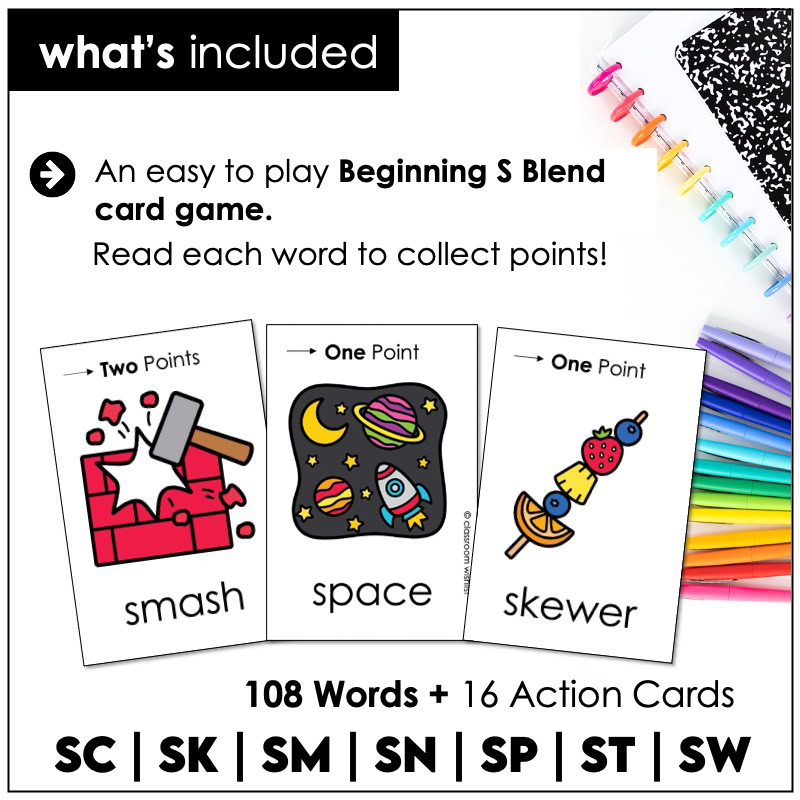
How I’d use it: Put students in pairs or groups of three. Before a student lays down a card, they have to read the word aloud. If they can’t, a partner helps them sound it out. That little moment of peer support is powerful. It turns every round into practice.
Sample student response: “This says snail. It starts with sn.”
What success looks like: Students can quickly name the blend and read the full word without inserting a vowel in between the sounds.
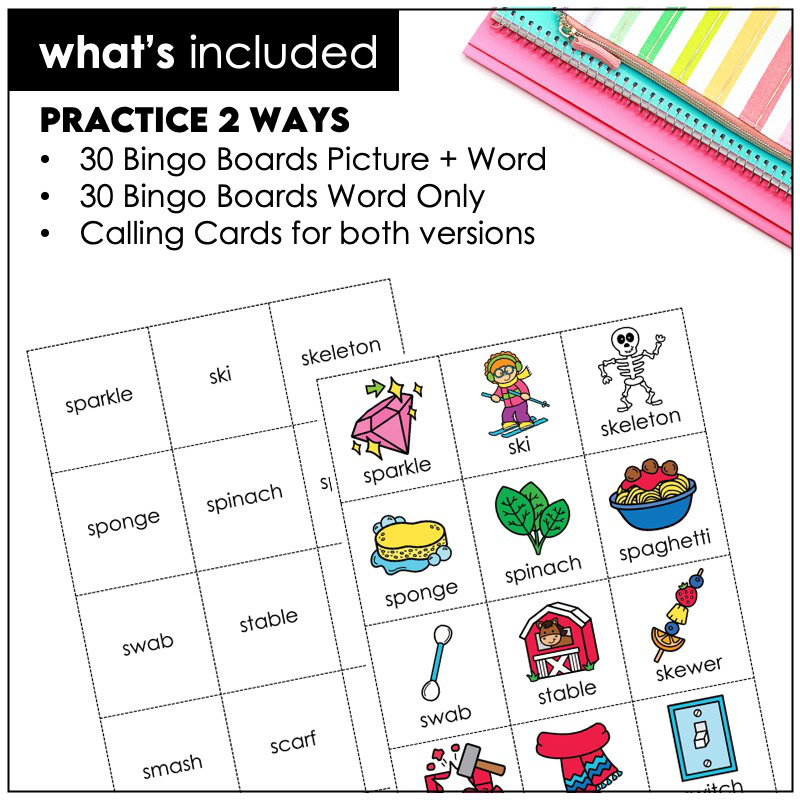
S-Blends Bingo: Whole-Class Practice That Doesn’t Feel Like Drill
S-blends bingo is one of my favorite ways to review multiple blends at once. Students love it, it works for whole-group instruction, and it gives you a quick way to see who is recognizing words automatically and who still needs support.
You can grab it here: S-Blends Bingo Game on Hot Chocolate Teachables or S-Blends Bingo Game on Teachers Pay Teachers.
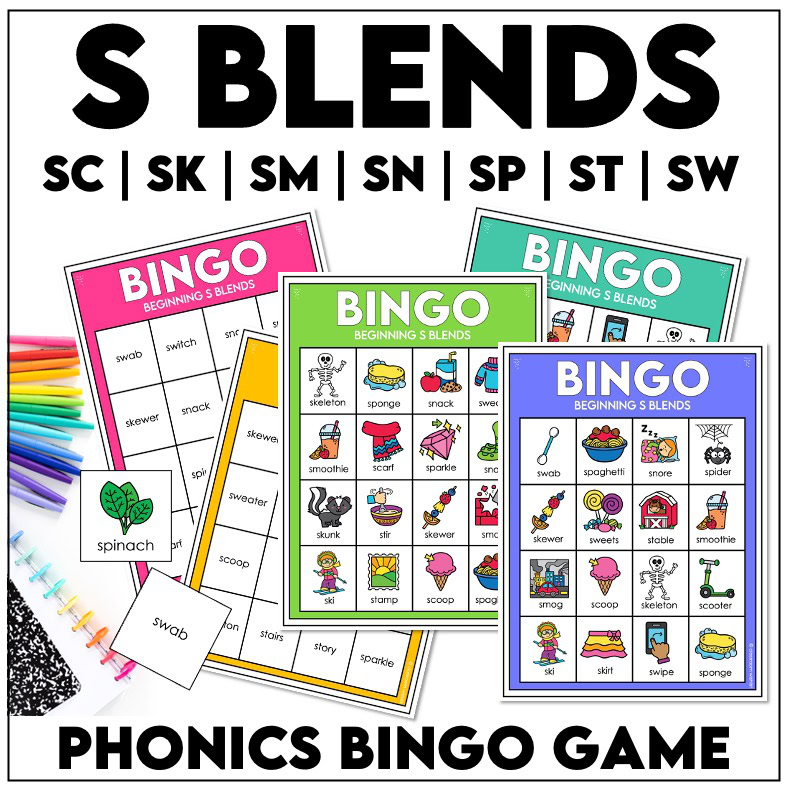
Bingo is perfect when you want to keep the entire class engaged but still focus on actual reading skills. It also works well because you can differentiate the level of support. If your set includes picture-and-word boards as well as word-only boards, you can match the activity to each group’s readiness.
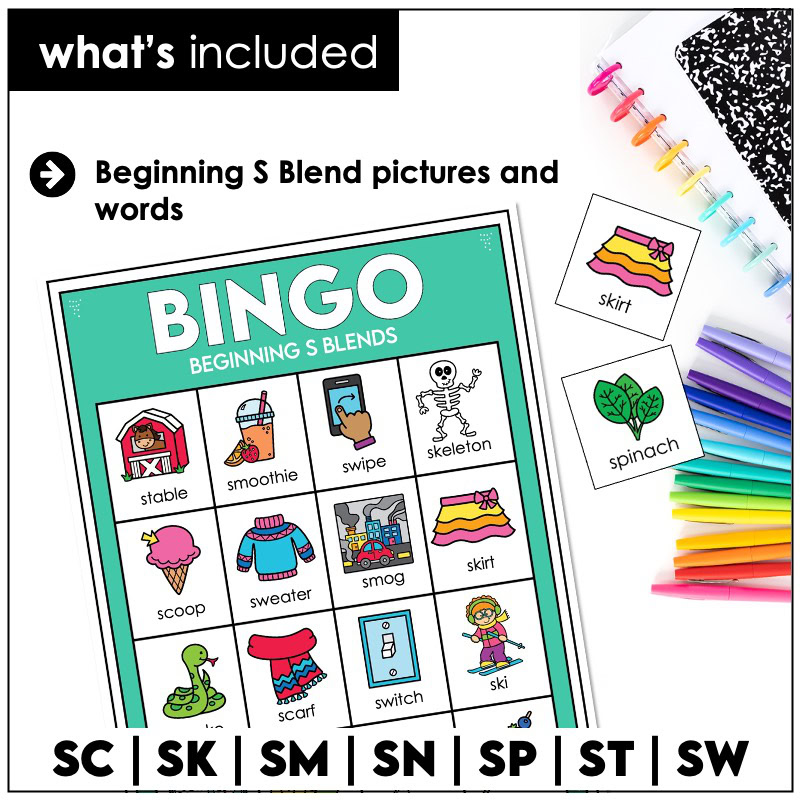
How I’d use it:
- Quickly review the target blends before starting.
- Show or call a word.
- Students locate the matching word on their board.
- Before covering the word, they read it aloud quietly to themselves or with a partner.
- When a student gets bingo, have them read back the words in the winning row.
That last step matters. It turns bingo from a luck-based game into a real reading check.
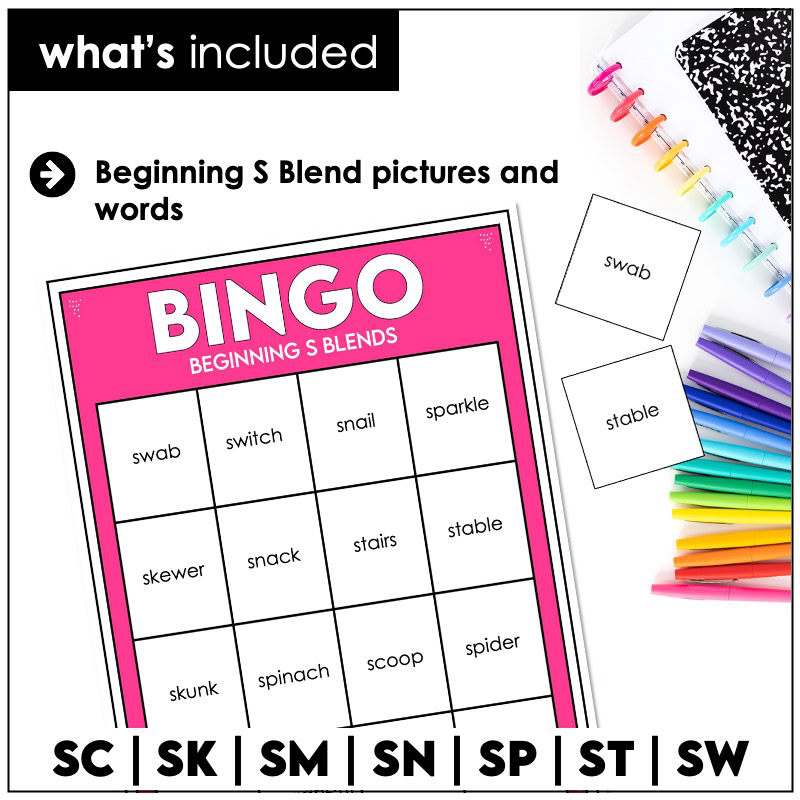
Why students love it: It feels fun and familiar, but it still gives them repeated exposure to blend patterns. Even hesitant readers are often willing to participate because the structure is clear and low-pressure.
Common mistake to watch for: Some students will spot the picture and mark it without fully reading the word. A simple fix is to require a whisper-read before covering each square.
S-Blends Clip Cards: Perfect for Independent Practice and Intervention
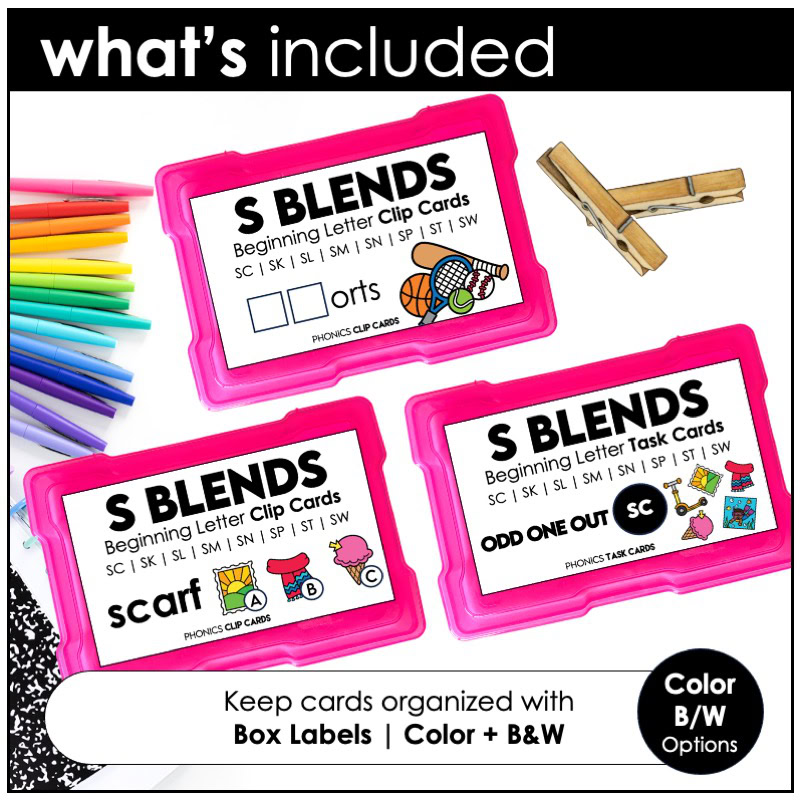
If you want a phonics activity students can use more independently, S-blends clip cards are a fantastic choice. They’re simple to set up, easy to store, and ideal for literacy centers, fast finishers, or targeted intervention groups.
You can find them here: S-Blends Task Cards on Hot Chocolate Teachables or S-Blends Beginning Sounds Task Cards on Teachers Pay Teachers.
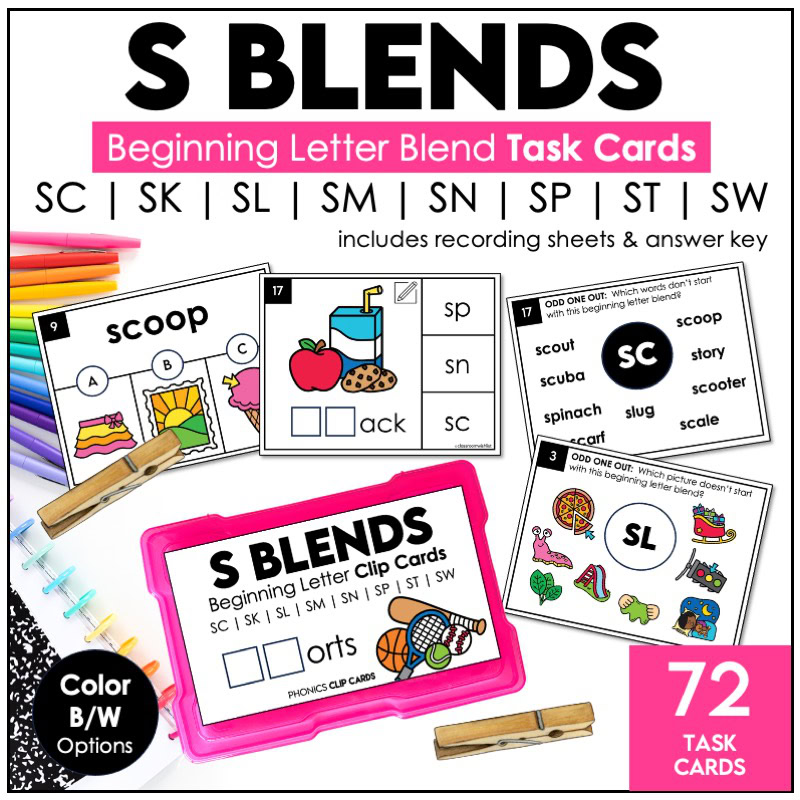
Clip cards are excellent for helping students slow down and notice details. That makes them especially useful for children who confuse similar-looking or similar-sounding blends.
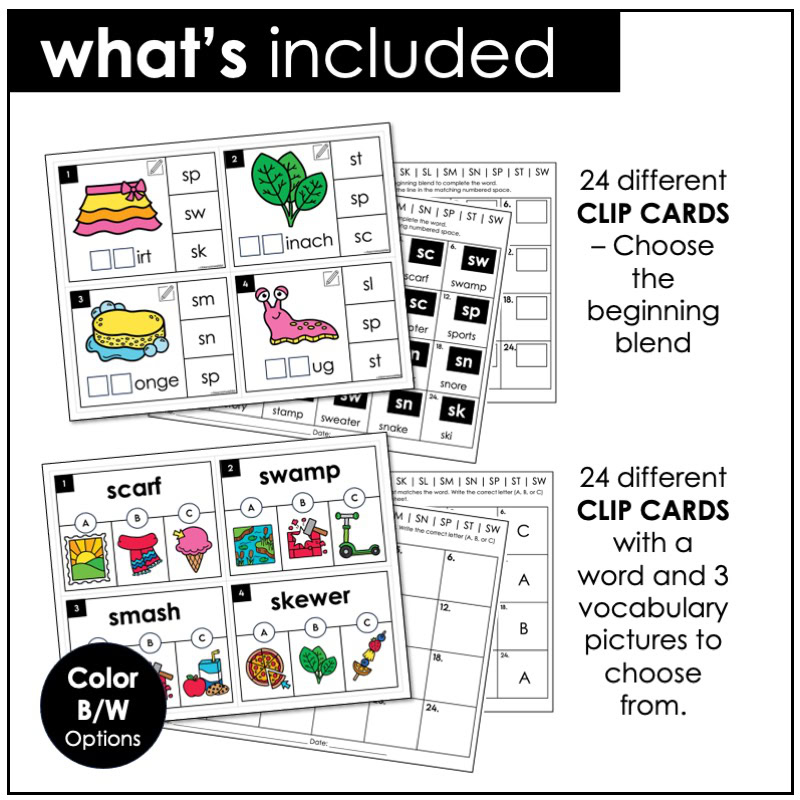
How I’d use them: Students read the picture-and-word prompt, then clip the correct answer. If I’m using them in a small group, I ask students to explain their choice aloud: “I clipped st because the word is star.” That oral explanation gives you immediate assessment data.
Sample task: A student looks at a card with a picture and chooses between two or more possible beginning blends.
Sample student response: “This is slide. It starts with sl.”
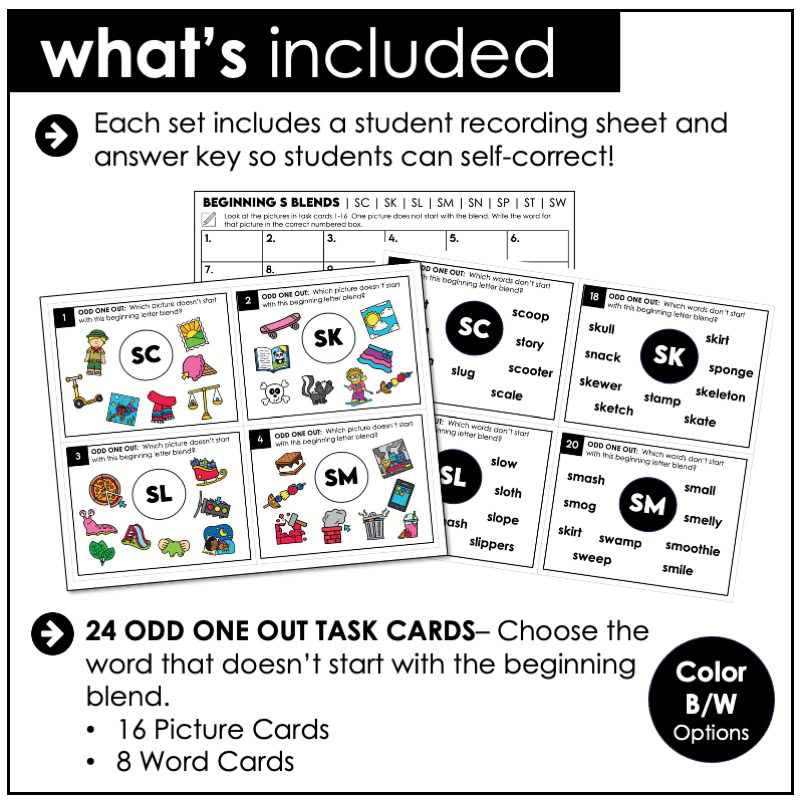
Another advantage is that these cards are easy to differentiate. You can:
- ask one group to identify the blend only
- ask another group to read the whole word
- extend the task by having students use the word in a sentence
- have students sort cards by blend after finishing
A 5-Day No-Prep S-Blends Lesson Routine
If you want a practical way to teach these blends in a busy first-grade classroom, here’s a simple routine you can repeat.
Day 1: Introduce the Blends
- Review sc, sk, sl, sm, sn, sp, st, sw
- Model how each blend sounds
- Read sample words together
- Time needed: 10–15 minutes
Day 2: Use Clip Cards for Accuracy
- Students identify the correct beginning blend
- Teacher circulates and listens for common errors
- Time needed: 10 minutes center time or small group
Day 3: Play Bingo for Recognition
- Use picture-and-word bingo boards first
- Move to word-only boards for students who are ready
- Time needed: 15–20 minutes
Day 4: Play the Card Game for Fluency
- Students read words before playing cards
- Add a recording sheet if you want written accountability
- Time needed: 15 minutes
Day 5: Review and Assess
- Mix clip cards and card game review
- Do a quick oral check or exit ticket
- Ask students to read 5–8 S-blend words independently
- Time needed: 10–15 minutes
How to Differentiate S-Blends Practice
One of the biggest teacher questions is: How do I make phonics games work for mixed-ability groups? The good news is that picture-and-word resources are already more flexible than many worksheets.
For Students Who Need More Support
- Use picture-and-word versions first
- Model the blend orally before asking them to read
- Practice only 2–3 blends at a time
- Keep groups small and teacher-led
For Students Who Are Ready for More
- Use word-only bingo boards
- Ask students to sort words by blend
- Have them write a sentence using the word
- Challenge them to identify the blend quickly without sounding out every letter
How to Check Learning Without Giving a Formal Test
You do not need a long assessment to see whether your students are learning S-blends. These resources make checking progress easy.
Quick Assessment Ideas
- During bingo: ask a student to read their winning row aloud
- During clip cards: ask students to explain why they chose a blend
- During the card game: listen for smooth reading without vowel insertion
- Exit ticket: show 3–5 words and ask students to read them independently
What success looks like: A student can read a beginning S-blend word accurately, identify the blend, and do it with increasing speed and confidence.
Why Teachers Love This Kind of Print-Once Practice
Teachers need phonics activities that are easy to manage, easy to store, and easy to pull out again later. That’s why I love having a set of reusable phonics games on hand. Once printed, these activities can become part of your regular literacy routine.
Here’s what makes them teacher-friendly:
- low-prep and easy to reuse
- great for centers, small groups, and whole-class review
- picture support helps struggling readers
- word-only options support growth
- students stay engaged longer than with worksheets alone
- activities target a specific phonics skill clearly
Teacher FAQs About Teaching S-Blends
1. What grade level are these S-blends games best for?
These activities are a strong fit for first grade, but they can also work for kindergarten review, second-grade intervention, ESL learners, and students who need extra phonics support.
2. Which S-blends are included?
This set focuses on sc, sk, sl, sm, sn, sp, st, and sw, which are common beginning blends for early readers.
3. Why are pictures helpful in phonics games?
Pictures give students a meaning clue, which helps confirm decoding. They are especially useful for learners who are still building confidence with early reading skills.
4. Can I use these games in literacy centers?
Yes. The S-blends card game, S-blends bingo game, and S-blends task cards all work well in centers. Clip cards are especially easy for independent center time.
5. How long should S-blends practice take each day?
For most first-grade classrooms, 10 to 15 minutes a day is enough if the practice is consistent. Short, repeated practice is usually more effective than one long lesson.
6. What if my students confuse similar blends?
Slow the practice down and limit the number of blends at first. Use clip cards and oral explanation so students must compare the sounds carefully.
7. Are these resources better than worksheets?
They’re not necessarily a replacement for every worksheet, but they are often more engaging and more effective for repeated oral and visual practice. Games help students stay motivated while giving them more opportunities to read aloud.
8. Can I use these for intervention?
Absolutely. These activities are very effective in intervention because they focus on one clear skill and allow for repeated practice with immediate teacher feedback.
9. How do I store these phonics games?
Laminated cards or printed cards stored in labeled boxes or envelopes work well. The included storage labels shown in the task card preview make organization even easier.
10. What’s the difference between the three resources?
Bingo is best for recognition and whole-class review. Clip cards are best for independent accuracy work. Card games are best for repeated reading and fluency practice.
Where to Find These S-Blends Phonics Games
If you want to build an easy phonics routine for teaching beginning S-blends in first grade, these resources are a great place to start:
- S-Blends Card Game on Hot Chocolate Teachables
- S-Blends Card Game on Teachers Pay Teachers
- S-Blends Bingo Game on Hot Chocolate Teachables
- S-Blends Bingo Game on Teachers Pay Teachers
- S-Blends Task Cards on Hot Chocolate Teachables
- S-Blends Beginning Sounds Task Cards on Teachers Pay Teachers
Final Thoughts
If your students are still working toward automaticity with sc, sk, sl, sm, sn, sp, st, and sw, a game-based phonics routine can make a huge difference. Instead of pulling together random practice activities, you can use a simple system: clip cards for accuracy, bingo for recognition, and card games for fluency.
That combination gives students exactly what they need—repetition, visual support, and active practice—without making phonics feel boring or overwhelming. And for teachers, it means less prep, easier planning, and reusable activities you’ll actually want to use again.
