


Easy Summer School Activities for Preschool and Kindergarten
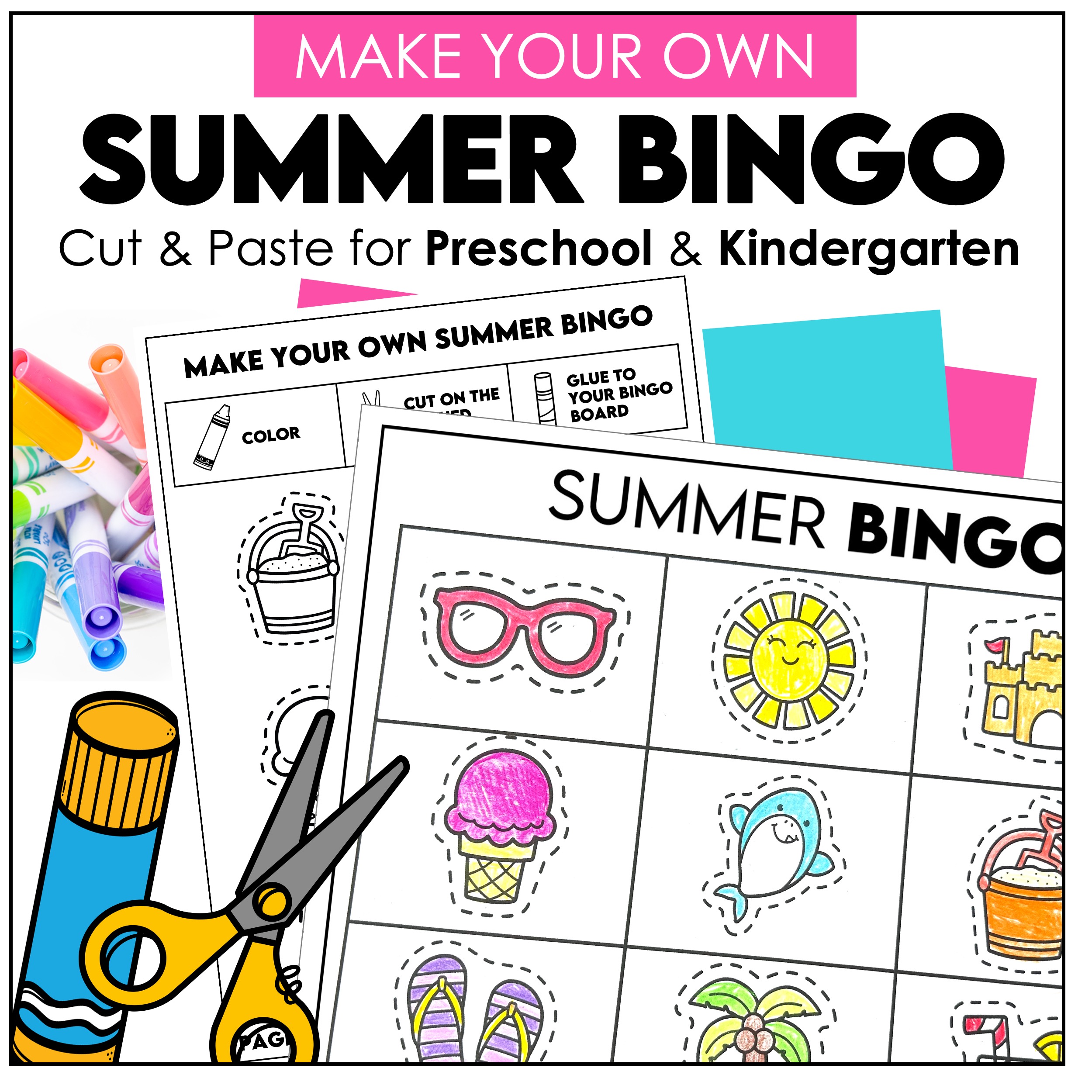
If you need a low-prep summer school activity that feels fun but still teaches, summer bingo is one of the easiest wins. This printable summer bingo game builds summer vocabulary, listening skills, and fine motor practice—with multiple ways to play so you can match the activity to your students’ needs.
In this post, I’ll show you why bingo works so well for young learners, what skills it targets, and three classroom-tested ways to use this summer bingo printable in preschool and kindergarten—without spending your prep time reinventing centers.
Get the resource here: Summer Bingo Game (Hot Chocolate Teachables) or Summer Bingo Game on TPT.
Why Use Bingo for Summer Vocabulary Practice?
Bingo works in summer school because it’s structured, predictable, and easy to repeat—without feeling repetitive to kids. When students play summer bingo for kids, they get multiple chances to hear, see, and use the same target words in a way that feels like a game, not a worksheet.
It’s also one of the most flexible summer activities you can run with limited time and mixed skill levels. You can play it whole group, small group, or as an independent center—making it a strong choice for summer school printable activities when you need simple routines that work every day.
- Predictable format helps students feel confident quickly.
- Repetition builds vocabulary retention (without boredom).
- Listening focus improves attention and following directions.
- Game feel increases engagement during hot, high-energy summer days.
What Skills Does Summer Bingo Practice?
This summer bingo game isn’t just about calling words. It’s a skills-packed routine that supports early learners in multiple ways—especially in preschool and kindergarten summer school.
Language and literacy skills
- Summer vocabulary development (picture-to-word connections)
- Listening comprehension (identifying the correct image from a prompt)
- Word recognition (for students ready for text support)
- Oral language (students name pictures, describe, and repeat target words)
Fine motor and classroom readiness skills
- Coloring (control, stamina, pressure)
- Cutting (scissor practice and hand strength)
- Gluing (spatial planning and neatness)
- Visual scanning (finding pictures on a grid)
That’s why this resource works as both a summer vocabulary game and a fine motor summer activity for kindergarten—you can choose the option that matches your students’ readiness.
Three Ways to Use This Summer Bingo Activity
The biggest reason teachers love this summer bingo printable is that it includes multiple ways to play. You can run the same theme all week—while changing the fine motor demand to match your group.
Teacher tip (experience-based): When I first used bingo with young learners, I tried to do “one perfect version.” It didn’t work—some students needed more cutting practice, others weren’t ready for scissors yet. Now I plan for options, and the whole class stays successful.
Option 1: Make Your Own Bingo Board
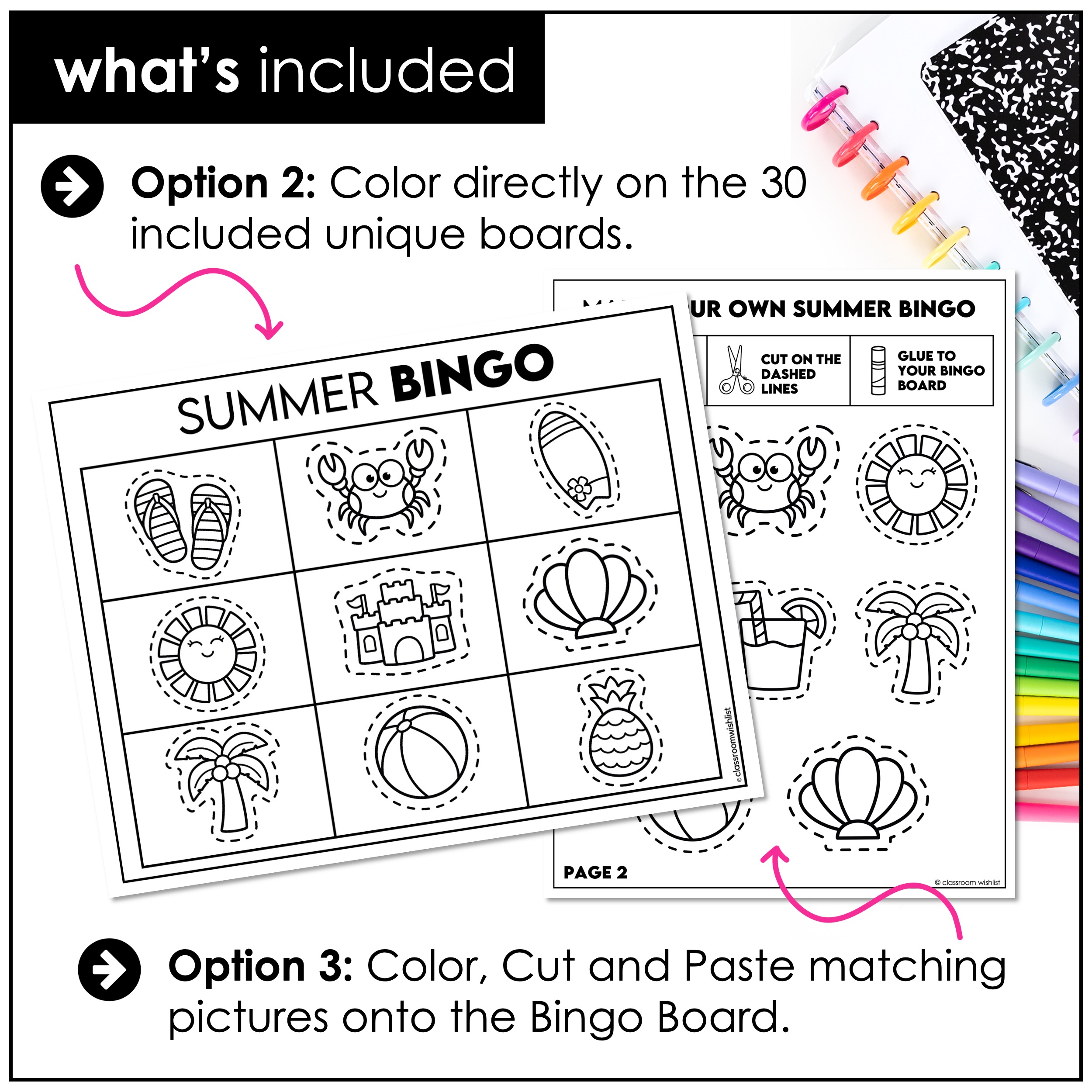
This option is perfect when you want creativity plus fine motor work. Students color the summer picture pieces, cut them out, and glue them onto the blank bingo board wherever they want. It feels like a craft, but it’s still structured vocabulary practice.
Materials
- Blank bingo board
- Summer picture cut-outs
- Crayons/markers
- Scissors
- Glue sticks
HowTo (quick classroom steps)
- Students color the summer picture cut-outs.
- Students cut along the lines (or you pre-cut for some learners).
- Students glue pictures onto the blank bingo board.
- Play summer bingo as a small group or whole class.
What students learn
- Vocabulary: students say and recognize summer words repeatedly
- Concepts of print/visual scanning: locating pictures on the board
- Fine motor control: coloring, cutting, and gluing
Example prompt: You say, “Find the ice cream.” Students locate the picture, repeat the word, and cover it. For stronger students, add a sentence: “I like ice cream.”
Option 2: Color the Ready-Made Bingo Boards
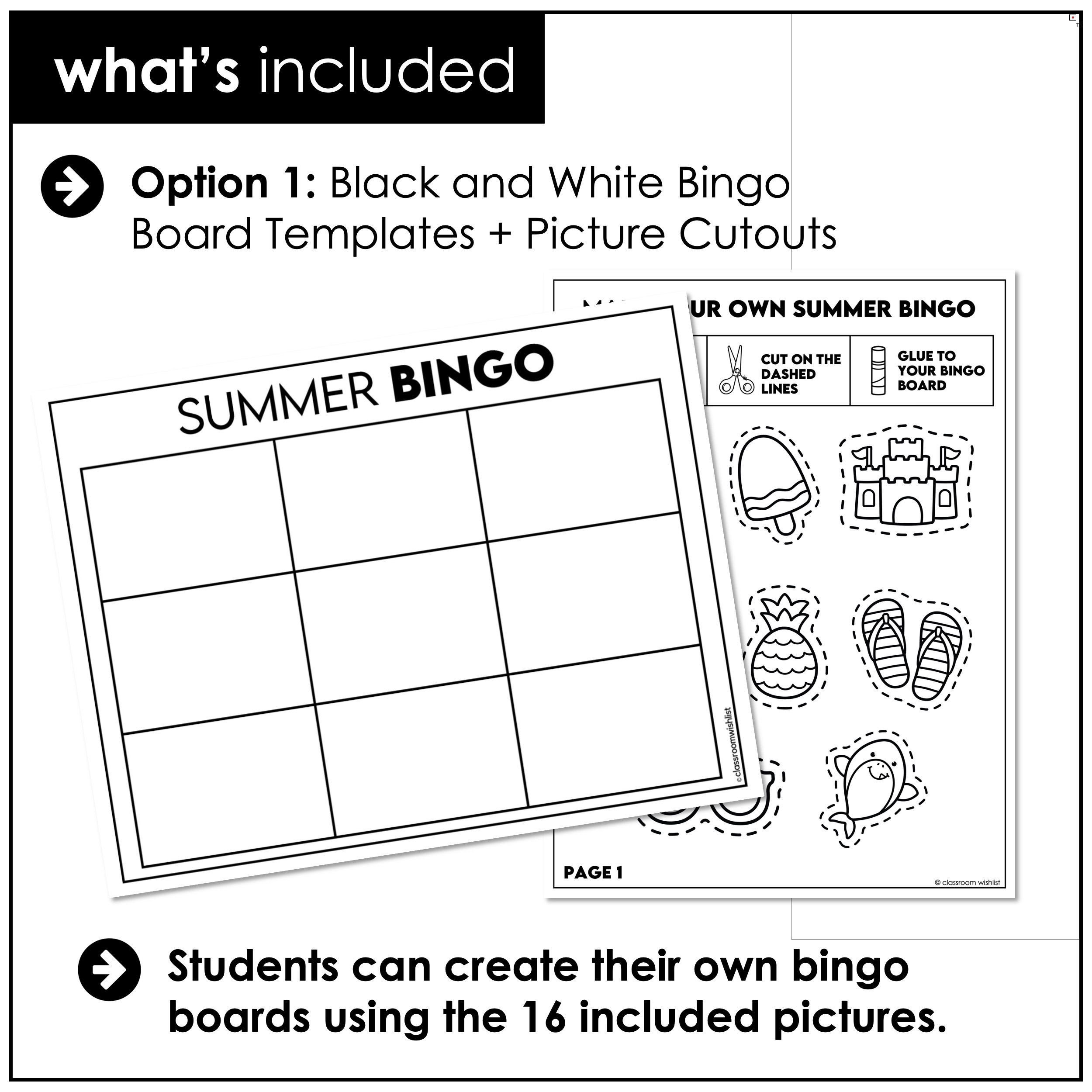
This is the simplest version—and it’s ideal for days when you need a true low prep summer activity for preschool. Students color a ready-made board (no cutting needed), then you play bingo immediately.
Why teachers love this option
- Fast setup (great for summer school schedules)
- No scissors required
- Still provides visual engagement and vocabulary repetition
- Works well for students who need a calmer fine motor task
Easy differentiation
- Beginners: picture-only listening prompts (“Point to…” “Cover…”)
- Advanced: students describe the picture before covering (“I see a…”)
This option keeps preschool summer bingo simple and successful—especially when you want routine and predictability.
Option 3: Color, Cut, and Paste Matching Pictures
This option adds an extra layer of fine motor practice and matching skills. Students color the pictures, cut them out, and paste them in the matching spaces. Then you play bingo.
If you’re specifically looking for summer vocabulary activities for preschool that support cutting and gluing skills, this is the best fit.
Why this option works well in summer school
- It slows down the pace in a good way (less rushing, more focus).
- It builds independence and accuracy through matching.
- It creates a finished product students feel proud of.
Common student mistake: gluing before checking.
Fix: Teach a “point-check-glue” routine: point to the spot, say the word, then glue.
Where to Use This Summer Bingo Game
This summer themed bingo game for kids works in more places than you might think. It’s flexible enough to run in short blocks or as part of a longer center rotation.
- Summer school centers (teacher-led or independent)
- Preschool and kindergarten small groups
- Morning tubs / arrival time (color first, play later)
- ESL/ELL vocabulary support (picture-based and low-pressure)
- Occupational therapy or fine motor stations
- Sub plans (simple directions, predictable routine)
Because it’s print-and-go and reusable, it’s a reliable choice for summer school activities when you need something fun that still reinforces learning.
What’s Included in the Printable Summer Bingo Game
This printable summer bingo game for kids is designed to be easy to prep and flexible to use. You can choose the version that matches your goals for the day—vocabulary listening, fine motor practice, or both.
Included materials
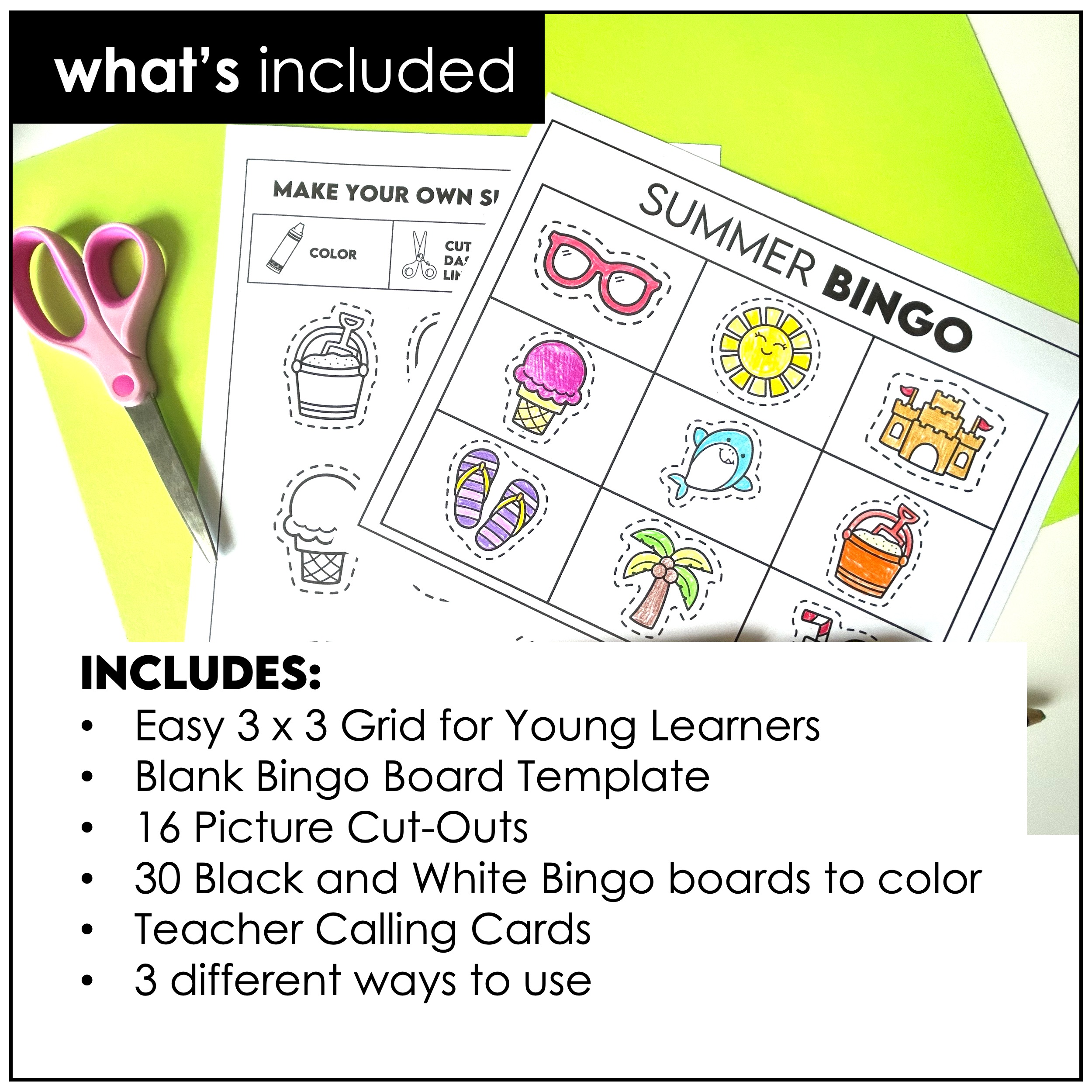
- 30 unique black-and-white bingo boards
- Blank 3×3 bingo board template
- 16 summer picture cut-outs
- Teacher calling cards
- Easy 3×3 grid format for young learners
- Three different ways to use the activity (options for cutting or no cutting)
Get it here: Summer Bingo Preschool + Kindergarten (Hot Chocolate Teachables) or Summer Bingo Game on TPT.
Easy Tips for Using Bingo with Young Learners
Keep the calling language consistent
Use the same simple phrases every time: “Find ___.” “Point to ___.” “Cover ___.” Consistency helps students focus on listening and vocabulary.
Start with fewer boards
If your group is very young, start with 3–5 boards and build up. Bingo works best when the pace stays calm and students can follow along.
Use picture support first, then add words
For preschool and early kindergarten, pictures are enough. Once students are ready, add labels or have students repeat the word after you call it to strengthen word recognition.
Make it reusable
Want to “print once, use forever”? Laminate boards, use dry-erase markers, or use small counters (buttons, cubes, mini erasers). A reusable summer bingo game becomes your go-to summer school center.
Quick checking and success criteria
Success looks like: students can identify the correct picture when they hear the word, stay engaged through a full round, and complete the fine motor steps with increasing independence.
Shop This Summer Bingo Activity
More Blog Posts You Might Like
- Low-prep ESL speaking games for the first week of school (routines that reduce awkward silence)
- Fun end-of-year ESL activities that are low-prep and student-approved
- Teacher Toolkit Membership: a quick place to find low-prep ESL activities anytime
Created by Hot Chocolate Teachables
