


This or That Speaking Task Cards for Critical Thinking and Discussion
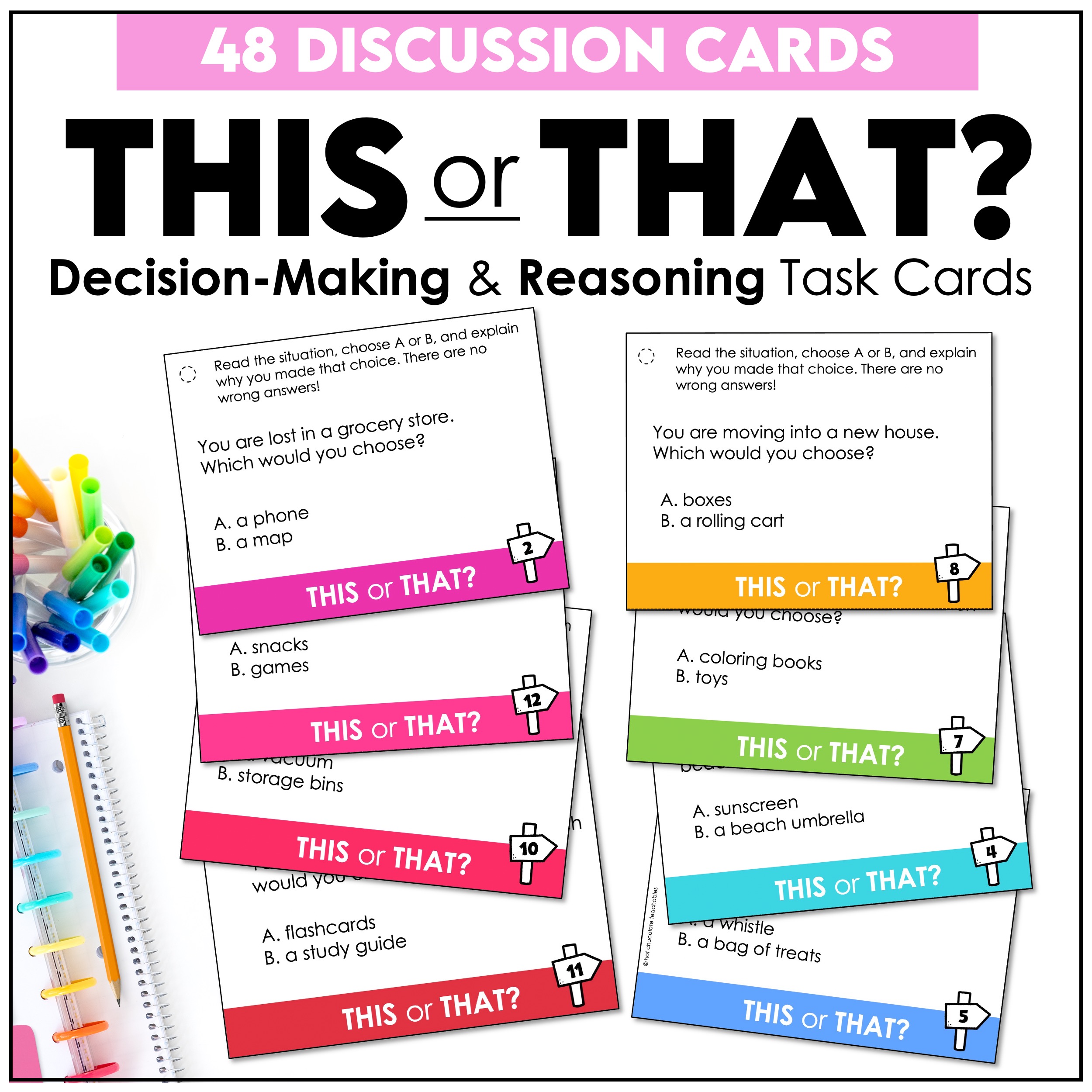
If your students go quiet when you ask an open-ended question, give them a choice instead. This or That task cards are an easy, low-pressure way to get real conversation going because students only need to pick one option—and then explain why it works better. The result is more confident ESL speaking, stronger reasoning, and fewer one-word answers.
Get the resource here: This or That Task Cards (Hot Chocolate Teachables) or This or That Speaking Task Cards (TPT).
Why This or That Questions Work So Well for Speaking Practice
This or That questions are simple on the surface, but they solve a huge classroom problem: many students don’t speak because they don’t know how to start. When you give two options, students can jump in immediately—then build language through reasons, examples, and follow-up questions.
That’s why This or That speaking task cards work so well for:
- Reluctant speakers who need a clear entry point
- Mixed-level classes where students can answer at different depths
- Low-prep speaking activities for ESL (easy routines, repeatable all year)
- Critical thinking speaking activities where there is no single “correct” answer
In other words: it’s structured enough to support beginners, but open-ended enough to challenge advanced students. That’s exactly what you want from ESL discussion cards and classroom conversation routines.
What Are This or That Speaking Task Cards?
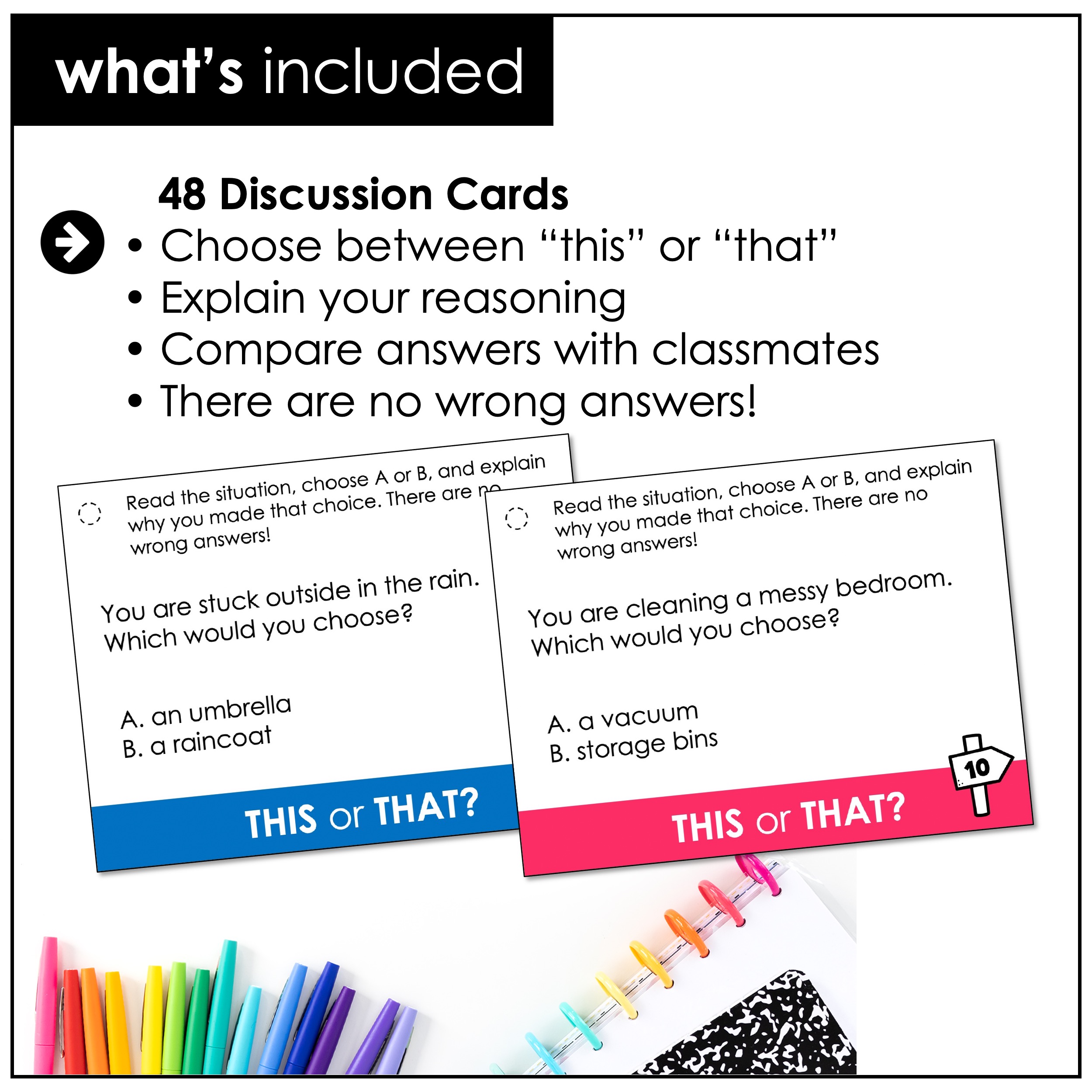
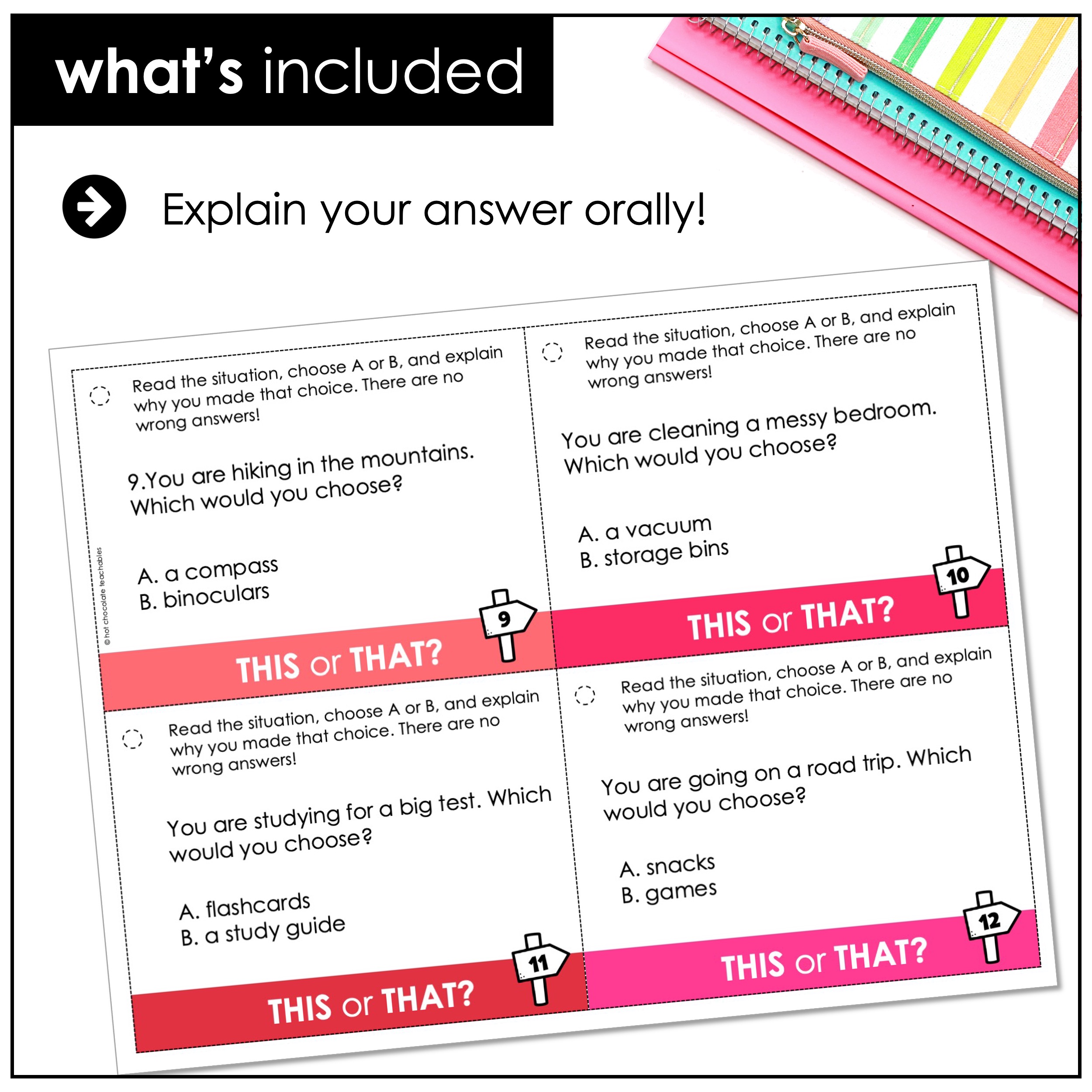
This or That task cards are speaking task cards that present a real-life situation and two choices: Option A or Option B. Students choose the option they think works best and explain their reasoning using evidence, personal experience, or problem-solving logic.
Think of them as classroom discussion cards for students—but with a built-in structure that keeps conversation moving. You get the benefits of debate and discussion without the pressure of a “big performance.”
How This Activity Builds Critical Thinking
Decision-making is a life skill—and it’s also a language skill. When students explain why one option is better than another, they naturally practice reasoning language: because, so, however, in my opinion, the best choice is, and it depends.
That makes these decision-making activities for ESL students useful for more than “talk time.” They build:
- Problem-solving: weighing pros and cons
- Logic and evidence: giving reasons, not just opinions
- Perspective-taking: listening and responding to others
- Academic discussion skills: agreeing, disagreeing, and clarifying
Teacher reality: When discussion is too open-ended, some students hide. With a two-option structure, everyone has something to say—even if it’s short at first.
How to Use the Cards with ESL Students
These cards are especially effective for ESL speaking task cards for discussion because they reduce pressure. Students can start with a simple choice (A or B), then expand their language as their confidence grows.
Simple differentiation (same card, different output)
- Beginner: Choose A/B + one sentence frame (“I choose A because…”)
- Developing: Add one example (“For example…”)
- Advanced: Add a counterpoint (“However…” / “On the other hand…”) and ask a follow-up question
Common student mistakes + quick fixes
- Mistake: one-word answers (“A.”)
Fix: require “choice + because” every time. - Mistake: repeating the same reason (“because it’s good”)
Fix: give a reason bank: safer, faster, cheaper, easier, more fair, more fun. - Mistake: stronger students dominate
Fix: structured turns: Speaker 1 (30s) → Speaker 2 (30s) → both ask one question.
This is what makes the cards so usable for ESL conversation cards for mixed-level classes: the task stays the same, but the language expectations can shift.
Ways to Use This or That Cards in Speaking Centers
The reason teachers keep coming back to speaking task cards is that they fit into routines. Once students learn the format, you can use them weekly without re-teaching the directions.
Center routine #1: Partner discussion + role cards
- Reader: reads the scenario aloud
- Decider: chooses A or B and gives one reason
- Challenger: asks a follow-up (“Why?” “What if…?”)
- Summarizer: restates the partner’s idea (“She chose A because…”)
Center routine #2: “Move to your side” discussion
Label one side of the room A and the other B. Students stand on the side they choose, then discuss with someone near them. This creates quick energy and increases participation without turning into chaos.
Center routine #3: Quick speaking check
Students complete 3 cards. For each card, they must produce:
- one choice sentence
- one “because” reason
- one follow-up question
This keeps the activity accountable and makes it one of the most reliable low-prep speaking activities for ESL.
Writing Extensions for This or That Prompts
These prompts also double as short writing prompts, especially when you want students to organize their thinking. Writing after speaking is powerful because students already rehearsed their ideas out loud.
Easy writing extensions (5–10 minutes)
- Opinion paragraph: “I choose ___ because ___, ___, and ___.”
- Pros/cons list: 2 benefits + 1 drawback for each option
- Advice letter: write to a “friend” explaining the best choice
- Compare answers: summarize a partner’s choice and respond
Teacher tip: If writing stamina is low, keep it short and structured. A 4–6 sentence response is enough to reinforce decision-making language.
Sentence Starters to Help Students Explain Their Choices
One of the fastest ways to improve discussion quality is to give students sentence starters. They turn “A” into full language—and they help quieter students enter the conversation without stress.
Choice + reason
- I would choose ___ because ___.
- The best option is ___ since ___.
- I think ___ works better because ___.
Examples + evidence
- For example, ___.
- In my experience, ___.
- This is important because ___.
Agreeing and disagreeing (respectfully)
- I see your point, but ___.
- I agree because ___.
- That makes sense. Another idea is ___.
These frames turn opinion questions into real discussion—exactly what you want from conversation cards and classroom speaking routines.
What’s Included in the This or That Task Card Set
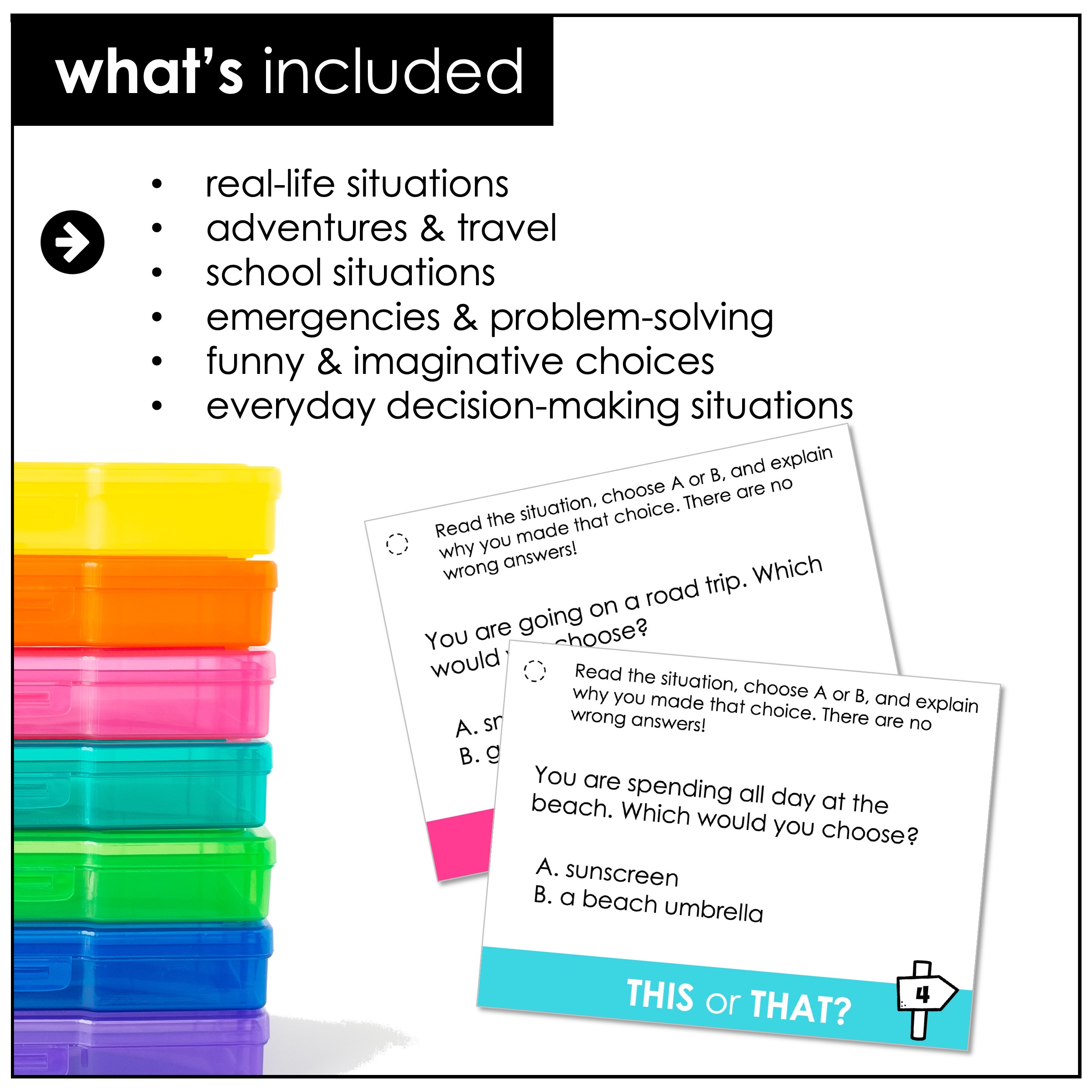
This resource is designed as opinion speaking task cards for students that feel relevant and real. Each scenario asks students to choose between two options and defend their choice—perfect for discussion, critical thinking, and problem-solving.
Get it here: This or That Task Cards (Hot Chocolate Teachables) or This or That Task Cards (TPT).
- 48 real-life decision-making discussion cards
- Scenarios that support critical thinking and ESL speaking
- Perfect for partners, small groups, centers, warm-ups, and sub plans
- Print-and-go format (easy to prep and reuse)
Easy Classroom Ideas for Using the Cards
- Bell ringer: project one prompt, quick partner talk
- Speaking center: 3 cards + roles + sentence frames
- Whole-class debate corners: students move to A or B and defend
- Early finishers: choose a card, record a 60-second response
- Writing follow-up: short opinion paragraph using frames
- Formative assessment: quick checklist (choice + reason + follow-up)
Success looks like: students can choose an option, give at least one clear reason, and respond to a partner with a follow-up question or respectful disagreement. When students reach that point, you’ve built real discussion habits—not just “talk time.”
Shop the This or That Speaking Task Cards
More Blog Posts You Might Like
- Teacher Toolkit Membership: unlimited ESL resources to save time all year
- Fun end-of-year ESL activities that are low-prep and student-approved
- Editable Amazon classroom wishlist QR cards to simplify parent donations
Created by Hot Chocolate Teachables
