


Stress-Free Classroom Valentine’s Day Party Ideas for Teachers
Valentine’s Day parties can be adorable… and also a little chaotic. Between coordinating a classroom card exchange, managing parent questions, keeping sugar levels in check, and trying to fit everything into a short block of time, it’s easy to feel overwhelmed.
This guide solves the most common teacher pain points with a simple plan you can follow: clear parent communication, a smooth card exchange, affordable student gift ideas, and fun games that work in real classrooms. If you want a Valentine’s Day classroom party that feels organized and joyful (instead of frantic), you’re in the right place.
Teacher Pain Points (and How to Fix Them Fast)
Before we jump into ideas, let’s name the stressors. When you plan around them, Valentine’s Day becomes easier instantly.
- Too many parent questions: “How many cards?” “Candy allowed?” “What’s the theme?”
- Card exchange chaos: kids wandering, missing names, cards falling everywhere.
- Last-minute scrambling: forgetting supply lists, not enough time, unclear expectations.
- Budget pressure: wanting cute gifts without spending a fortune.
- Games that flop: activities that take too long to explain or don’t hold attention.
The best fix is a predictable structure: one clear message to families, a simple exchange routine, and short activities that rotate quickly.
Step 1: Set Expectations for Parents (So You Don’t Answer 50 Emails)
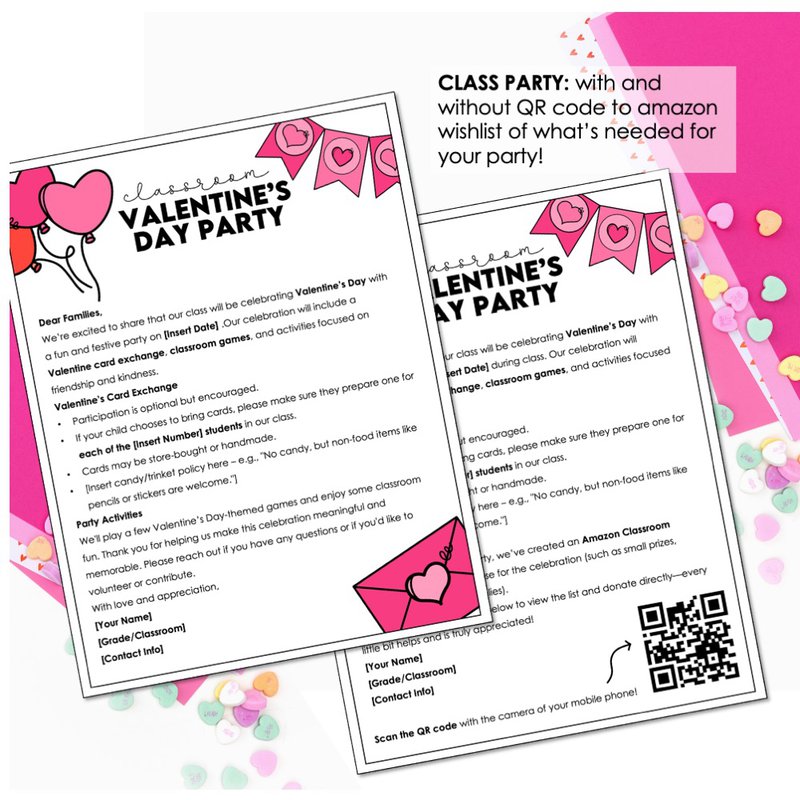
The fastest way to reduce stress is sending home a clear Valentine’s Day party letter. When parents know exactly what to do, you avoid the last-minute confusion (and the accidental “Pinterest competition”).
A simple parent letter can cover:
- Card exchange rules (how many cards, whether names are required)
- Treat guidelines (if any) and allergy reminders
- Party schedule (what time you’ll celebrate)
- Wishlist items (if you accept donations)
- What NOT to send (messy items, balloons, large gifts, etc.)
If you want a quick, editable option that looks polished, these editable Valentine’s Day party parent letters and card exchange notes make expectations crystal clear. You can also find it on TPT here: Valentine’s Day class party send-home letter (editable).
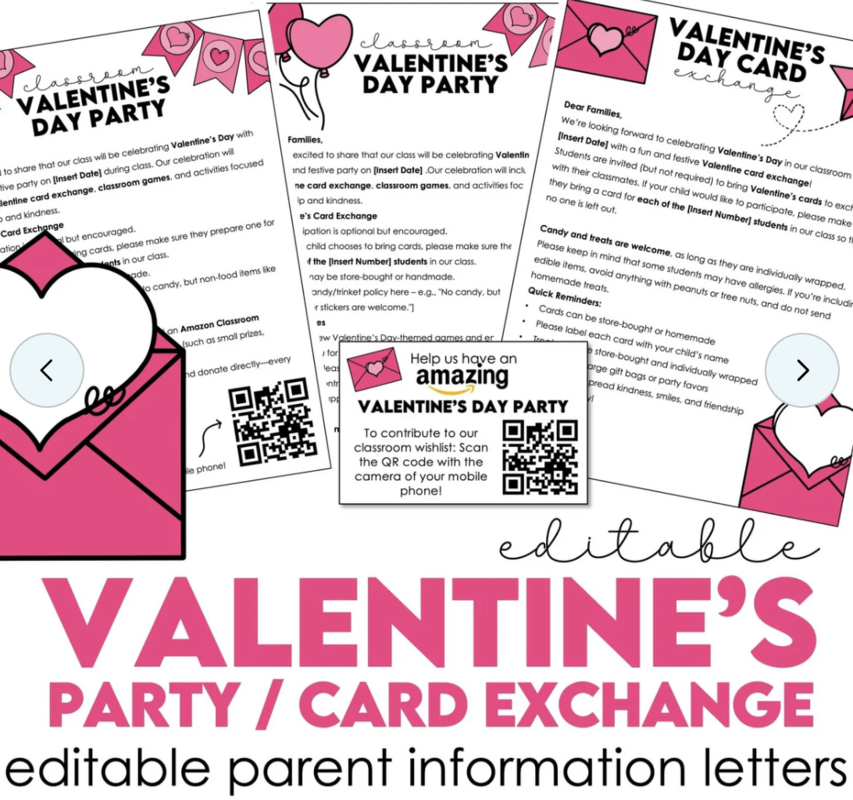
Teacher Tip: Add a QR Code for Sign-Ups (and Save Your Sanity)
If your school allows it, a simple QR code for wishlist donations (napkins, cups, stickers, pencils) helps you avoid the “10 parents send cupcakes” situation. One list. One system. Done.
Step 2: Plan a Card Exchange That Isn’t Chaotic
The secret to a smooth classroom Valentine card exchange is a routine that doesn’t require kids to roam the room with handfuls of cards.
1) “Mailbag” Exchange (Fastest + Cleanest)
- Send home a class list of first names (or have students write names at school).
- On party day, each student has a bag/box (paper bag, decorated envelope, small bin).
- Students sit at desks. Helpers (or table captains) deliver cards to each “mailbag.”
- Students open cards at the end (or take them home if time is tight).
2) : Table Exchange (Great for Centers)
- Assign students to tables.
- One table at a time “delivers” cards while others do a quiet activity.
- Use a timer: 3–5 minutes per table group.
3) : Whole-Class “Pass and Place” (Structured Movement)
- Students line up with their cards in one stack.
- They walk a simple route (one direction only) and place one card per stop.
- When they reach the end, they sit and switch to a calm activity.
If you want a super clear set of expectations that parents can follow (especially if names need to be included), this is exactly where the editable card exchange letter + planning set helps—because it tells families what to do before the cards ever enter your classroom.
Step 3: Cute, Low-Cost Student Gifts (That Won’t Break the Bank)
You don’t need big gifts to make kids feel special. The best classroom Valentine gifts are:
- Affordable (you can prep them quickly without overspending)
- Useful (students actually want them)
- Low-prep (no assembling 25 complicated crafts)
- Classroom-friendly (minimal mess, minimal sugar overload)
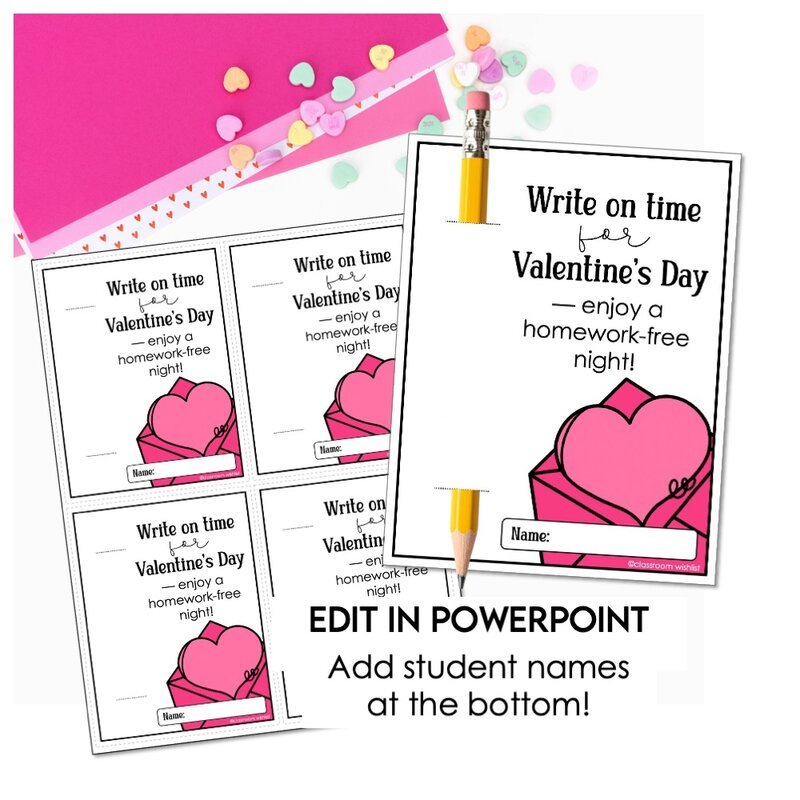
Gift Idea #1: Valentine’s Homework Pass + Pencil Holder (Student Favorite)
A homework pass is a “big deal” to kids, but it’s inexpensive and easy for teachers. Pair it with a pencil and you’ve got a practical Valentine gift that feels special.
This printable option makes it simple: Valentine’s homework pass pencil holder gift tag (also available on TPT: Valentine’s Day homework pass student gift).
Why teachers love homework passes:
- They feel like a reward without adding clutter.
- You control when students can use them.
- They work for any age and any subject.
- They’re easy to prep in bulk.
Gift Idea #2: Simple Valentine Treat Tags (Easy + Adorable)
If you want a cute gift without planning a whole party favor, a printable Valentine treat tag is your best friend. Add a lollipop, a ring pop, a small sticker, or a pencil and you’re done.
Here’s a low-prep option: Valentine’s Day gift tags for student treats.

More Low-Cost Valentine Student Gift Ideas
- Bookmark + “You are loved” note (printable and low-ink)
- Sticker sheet + mini note
- Heart-shaped eraser + pencil
- “Read With Someone You Love” reading coupon
- Extra recess / line leader coupon
- Small bubble wand (if your classroom rules allow)
Time-saving suggestion: Pick one gift and keep it consistent year to year. Your future self will thank you.
Step 4: Fun Valentine’s Day Games That Actually Work in a Classroom
The best classroom party games are quick to explain, easy to reset, and structured enough to keep excitement from turning into chaos. Here are two teacher-friendly favorites that work for a wide range of learners.
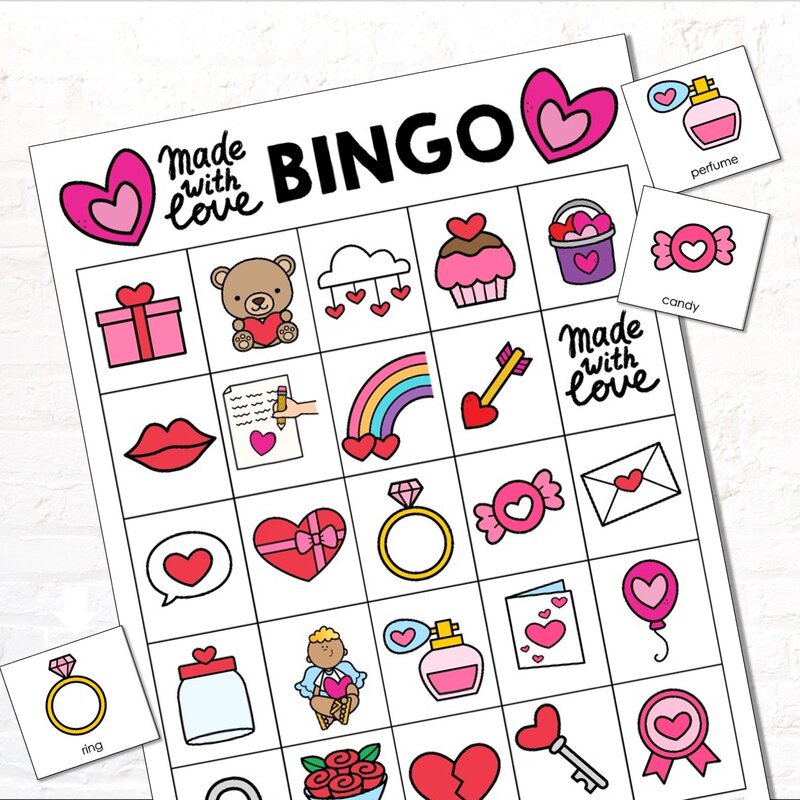
Game #1: Valentine’s Day Bingo (Easy Win for Whole Class)
Bingo is a classic for a reason: it’s simple, engaging, and students instantly understand the goal. You can run Bingo in 10–15 minutes, take a quick brain break, and then rotate into another activity.
This themed version is perfect for February vocabulary and classroom fun: Made With Love Valentine’s Day Bingo game.
How to make Bingo smoother:
- Set expectations: chips stay on the board, voices at level 1–2.
- Give each table a bag of markers/chips to avoid passing around supplies.
- Use “quiet wins” (bookmark, sticker, homework pass, or extra read time).
- Play “four corners” or “X” instead of full blackout to keep it fast.
Game #2: Valentine’s Day Charades (Movement + Language Practice)
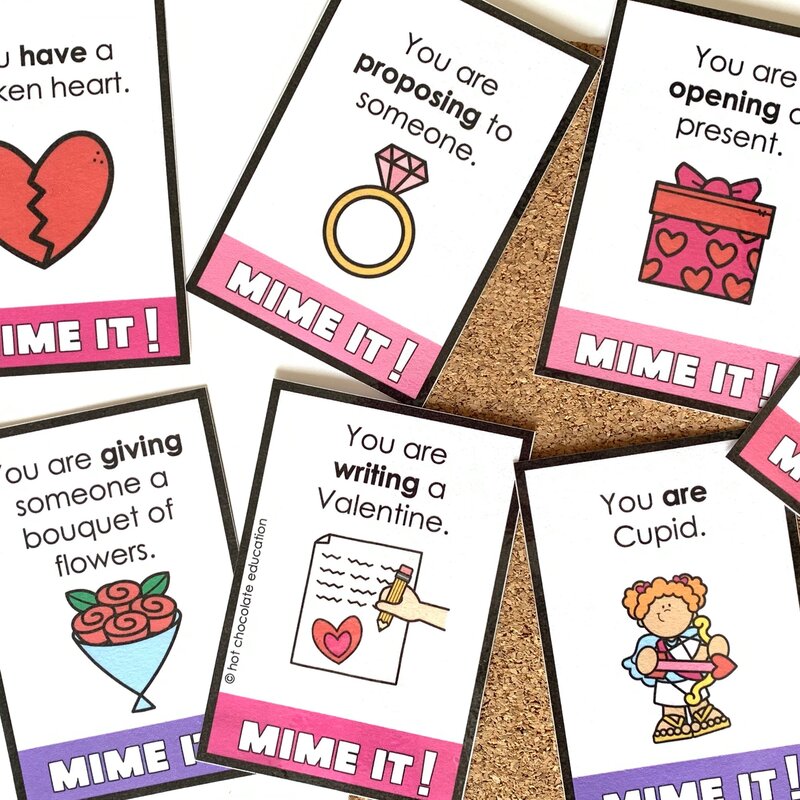
If your students need to move (and they usually do), charades is the perfect structured movement game. It’s also great for ESL because students practice action verbs and can build sentences like “He is dancing” or “She is writing.”
Use these Valentine-themed action verb charades cards: Valentine’s Day action verb charades (also on TPT: Valentine’s Day charades present continuous miming cards).
Teacher-friendly charades formats:
- Whole-class: one student acts, class guesses (fast and controlled).
- Teams: students act for their table group with a 30-second timer.
- Sentence challenge: require a full sentence: “He is jumping.”
- Quiet round: students write the verb they think it is before guessing.
Your Stress-Free Valentine’s Day Party Timeline
Here’s a realistic timeline that keeps the day calm and organized. Adjust the minutes to match your schedule.
1–2 Weeks Before
- Send home your parent letter with card exchange expectations.
- Decide your card exchange method (mailbags, tables, or pass-and-place).
- Choose 1–2 games (Bingo + Charades works great).
- Pick one simple student gift (homework pass or treat tag).
3–5 Days Before
- Prep card exchange supplies (bags/boxes/labels).
- Print game materials and student gifts.
- Assign helpers (student jobs or parent volunteers if allowed).
- Review behavior expectations and party schedule with students.
Party Day (Simple 60-Minute Sample Plan)
- 10 min: quick welcome + review expectations
- 15 min: card exchange (mailbag delivery or table exchange)
- 15 min: Valentine’s Bingo
- 10 min: charades movement round
- 10 min: clean-up + students open cards / pack up
If You Have Less Time (30-Minute Plan)
- 10 min: card exchange
- 15 min: Bingo
- 5 min: quick wrap-up + hand out gifts
Quick Classroom Management Tips for Valentine’s Day
- Preview the schedule: write the party plan on the board so students know what’s coming.
- Use a timer: transitions are smoother when the class can “see” time passing.
- Keep movement structured: one-direction traffic prevents collisions and chaos.
- Plan clean-up: assign 3–5 student jobs (trash, table wipe, supply bin, floor check).
- Keep expectations simple: “kind words, quiet hands, follow directions the first time.”
Soft Sell: The Easiest Way to Make the Card Exchange Smooth
If you want the simplest way to communicate expectations (without writing your own letter from scratch), this editable set is designed specifically for busy teachers: Valentine’s Day party parent letters + card exchange + wishlist. It’s an easy, professional way to explain what families should do so your party runs smoothly.
Prefer TPT? Here’s the same resource: Valentine’s Day class party send-home letter (editable).
Related Valentine’s Day Blog Posts You Might Like
- Free Valentine’s Day Charades Party Game (Printable & Classroom-Ready)
- The Best Valentine’s Day Activities for ESL Classrooms
Final Thoughts: You Can Have a Fun Party Without the Stress
A successful Valentine’s Day classroom party doesn’t require elaborate crafts or hours of prep. When you have clear expectations for families, a simple card exchange routine, one affordable gift, and a few structured games, the day feels joyful instead of overwhelming.
Use this post as your planning checklist, and you’ll walk into Valentine’s Day feeling ready, organized, and confident—because you’ve got a plan from start to finish.
